

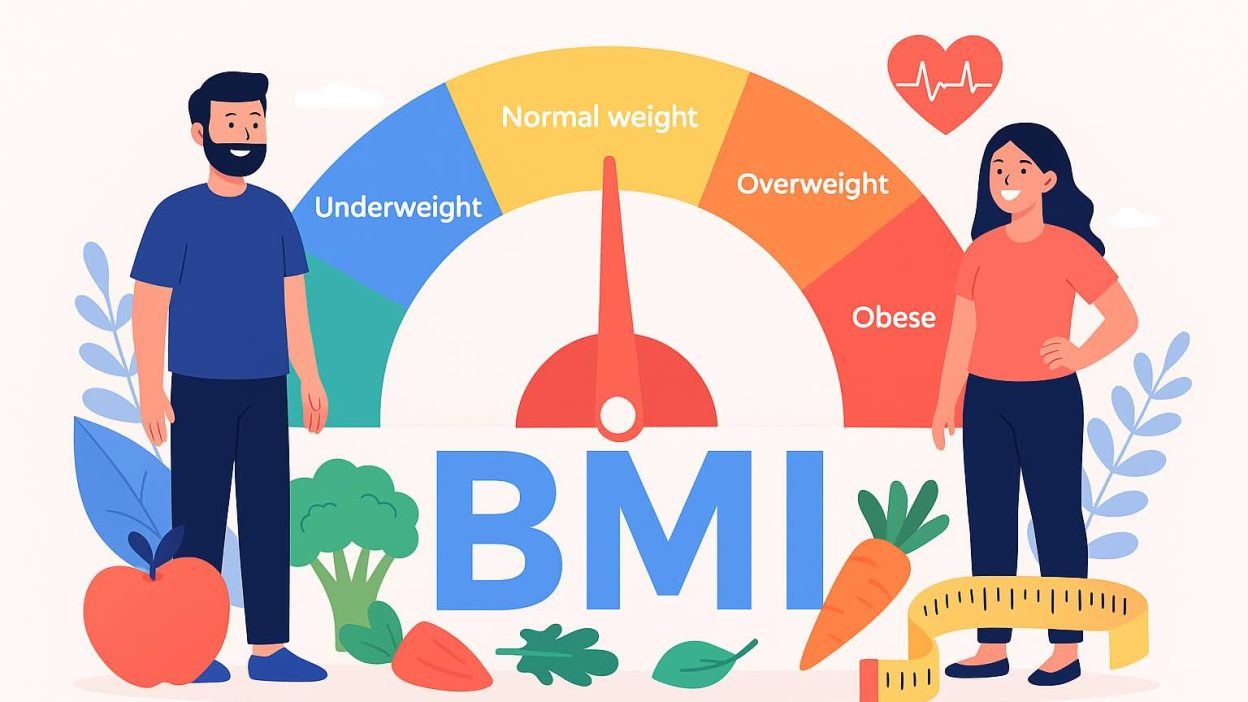
Ever wondered what your weight really says about your health status? BMI, or Body Mass Index, gives a quick snapshot of body fat based on height and weight. It’s simple, widely used, and a common health screening tool—but is it telling the whole truth? Let’s break it down and see what really matters for your overall health.
 BMI Calculator
 BMI Calculator
What Does BMI Measure?
Let’s start with the basics—BMI stands for Body Mass Index, a measure of body fatness based on height and weight. It’s a number that comes from a simple math formula: your weight divided by your height squared. Think of it as a quick check, like a traffic light, giving you a green, yellow, or red signal about your body composition.
BMI doesn’t directly measure body fat. Nope, it’s more of an estimate, a rough guess based on size—not shape. It doesn’t care if you’re muscular or curvy, it just takes your body weight and height, crunches the numbers, and spits out a score that tells you where you land on the weight status scale.
So, while BMI can be handy for spotting trends, it doesn’t tell the whole story. It’s a starting point, not the final word for individual health.
How to Calculate BMI
Calculating your Body Mass Index is easier than you think. The formula? Body weight in kilograms divided by height in meters squared. Like this: BMI = weight (kg) / height (m²). If you’re working with pounds and inches, just tweak it a bit: BMI = (weight in lbs / height in inches²) × 703.
Let me give you an example. Say you weigh 70 kg and stand 1.75 meters tall. Here’s the math: 70 ÷ (1.75 × 1.75) = 22.9. That’s your BMI—pretty straightforward, right?
Or in imperial: You weigh 154 lbs and are 69 inches tall. Plug it in: (154 ÷ 69²) × 703 = 22.7. Boom, there’s your BMI again.
Not into math? No problem. Plenty of online BMI calculators can do the work for you in seconds—just pop in your numbers and you’re set to check your weight status quickly.
BMI Calculation Chart
Want to skip the math? Here’s a handy BMI chart to give you a quick look at where your BMI might fall based on your height and weight. Just find your height, scan across to your weight, and see your BMI range and corresponding BMI category.
| Height | Weight (kg) | Weight (lbs) | BMI |
|---|---|---|---|
| 1.60 m (5’3″) | 50 kg | 110 lbs | 19.5 (Normal weight) |
| 1.65 m (5’5″) | 68 kg | 150 lbs | 25.0 (Overweight) |
| 1.70 m (5’7″) | 85 kg | 187 lbs | 29.4 (Overweight) |
| 1.75 m (5’9″) | 95 kg | 209 lbs | 31.0 (Obesity Class I) |
| 1.80 m (5’11”) | 60 kg | 132 lbs | 18.5 (Underweight) |
| 1.85 m (6’1″) | 75 kg | 165 lbs | 21.9 (Normal weight) |
This is just a sample guide—real results can vary a bit, but this gives you a solid idea of where you might stand. For exact numbers, plug your stats into an online BMI calculator.
BMI Categories and What They Mean
Once you’ve got your BMI number, what does it actually say about you? Here’s the breakdown—think of it as a health report card that gives you a rough idea of your body fat percentage and associated health risks:
- Underweight: Less than 18.5
Your body fat may be too low. It might mean not enough fat mass, which can cause issues like low energy or weaker immunity. - Normal weight: 18.5 – 24.9
This is the healthy body range. Your weight’s in a range that’s linked to fewer health risks. Aim to stay here if you can. - Overweight: 25 – 29.9
You’ve got more fat than ideal. Not a crisis, but it might be time to think about healthier habits to avoid chronic health conditions. - Obesity Class I: 30 – 34.9
Carrying excess body fat that could increase the risk for certain health problems like diabetes or heart disease. - Obesity Class II: 35 – 39.9
Health risks associated with high BMI grow. Consider seeking medical advice. - Obesity Class III: 40 and above
This is severe obesity. The risk of various health complications is high, and professional support is key.
Remember, BMI isn’t always accurate for everyone. Your health depends on more than numbers alone.
Why Does BMI Matter?
So, why all the fuss about BMI? It’s a simple screening tool that helps doctors spot possible health risks linked to body fat. It’s one measure of body fatness based on height and weight, giving a rough idea of whether your weight is healthy.
BMI can indicate if you’re at risk for conditions like high blood pressure, type 2 diabetes, heart disease, and other health problems. The higher your BMI, the higher the risk of these issues.
What makes BMI handy is how fast and easy it is. No needles, no lab work—just height and weight, and you’ve got an idea of where you stand. But remember, BMI is just one measure—it doesn’t directly measure body fat.
Limitations of BMI
BMI isn’t perfect. It’s an indirect way to measure body fat and doesn’t account for muscle mass. Athletes or people with a lot of lean body mass might have a high BMI but low body fat.
BMI is also not ideal for older adults, pregnant women, or children and teens. Growth charts or different methods are better for them.
Plus, BMI doesn’t consider how fat is distributed—like belly fat—or ethnic differences that affect health risks. So, while BMI is a useful tool, it should be considered alongside other factors.
BMI vs Other Measurements
BMI’s quick, but sometimes you need more. Here’s how other tools can give better insight into your body composition and overall health:
Waist Circumference: Measure around your belly. Too much fat here ups the risk of certain health issues, even if BMI seems normal.
Body Fat Percentage: This tells you exactly how much of your body is fat. A better measure for fit or muscular folks.
Waist-to-Hip Ratio: Shows how your fat is distributed. A higher ratio often means more risk for health problems like heart disease.
Each measure has pros and cons. That’s why combining them gives you the clearest picture of your healthy body composition.
Should You Worry About Your BMI?
Don’t stress over a single number. If your BMI is outside the normal range, talk to your doctor about your overall health, including blood pressure, cholesterol, and family history.
Focus on the basics: eat well, exercise, sleep enough, and manage stress. These daily habits have a bigger impact on your health than BMI alone.
BMI’s just a guide—one way to help understand your weight and health risks, not a final judgment.
Tips to Improve Your BMI
Want a healthier BMI? Start small:
- Balanced Diet: Choose whole foods—veggies, fruits, lean proteins. Avoid too much processed food or sugar.
- Regular Physical Activity: Move daily. Walking, swimming, or strength training helps lower fat and build muscle mass.
- Sleep and Stress: Sleep well and keep stress low—it affects your weight and health risk more than you think.
- Make Sustainable Changes: No crash diets. Consistency with healthy habits is what counts.
Improving your BMI takes time, but steady steps make a big difference for your long-term health.