
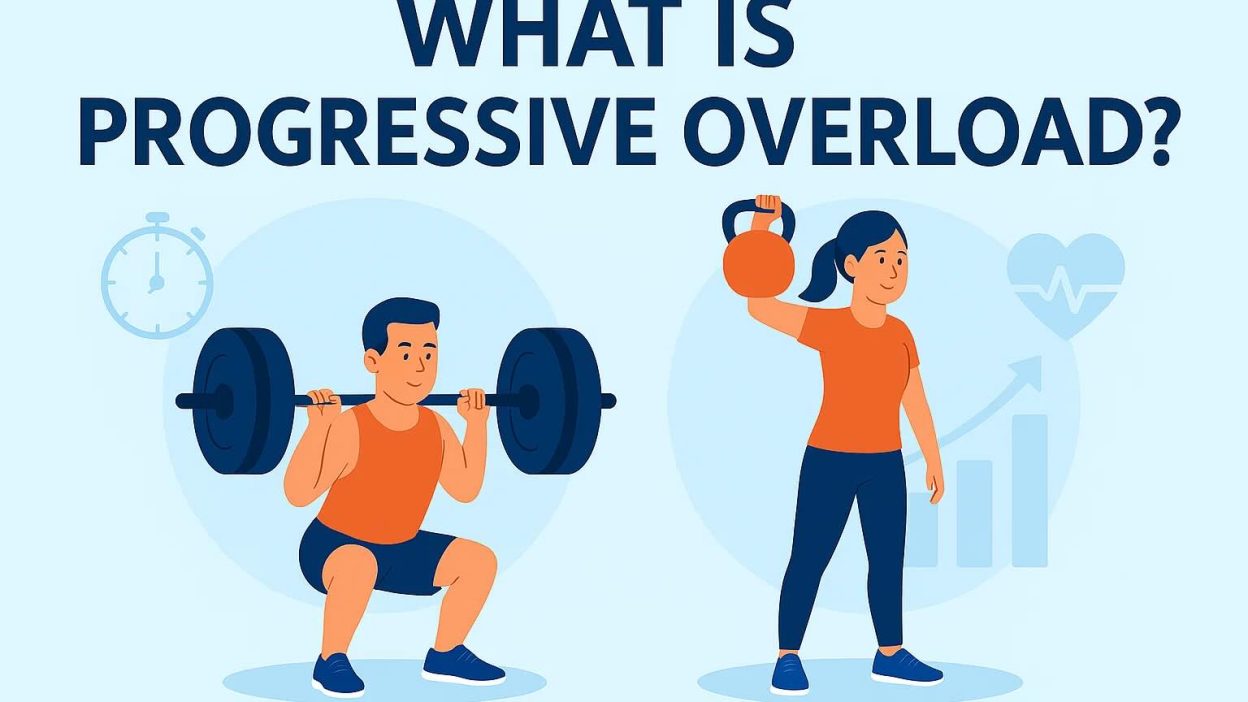
Progressive overload is the secret behind real strength gains. It means pushing your body a little harder over time—lifting more, moving better, or lasting longer. In this guide, I’ll explain how it works, why it matters, and exactly how you can apply it to your strength training —step by step.
Definition of Progressive Overload
Progressive overload is a simple concept with powerful results: you gradually increase the challenge in your workouts—like adding weight, reps, or intensity—so your body adapts and gets stronger over time.
This isn’t just for bodybuilders or elite athletes. Whether you’re lifting dumbbells, doing push-ups, or running laps, progressive overload applies to everyone. It’s how beginners build a base, and how experienced lifters keep making gains.
At its core, progressive overload is the driving force behind muscle growth, strength development, and endurance improvements. Without it, your body simply maintains. With it, your body evolves.
Why Progressive Overload Matters
If you keep lifting the same weight or doing the same number of reps forever, your body won’t change. That’s where progressive overload comes in—it’s the difference between staying stagnant and getting stronger.
By challenging your muscles a little more each session, you:
- Prevent plateaus: Keep your body adapting instead of leveling off.
- Track measurable progress: Whether it’s reps, weight, or time, you know you’re improving.
- Stimulate muscle fibers: Growth only happens when muscles are pushed beyond their comfort zone.
- Strengthen connective tissues: Tendons and ligaments get stronger as you progress safely.
- Trigger neuromuscular adaptation: Your brain and muscles learn to work together more efficiently.
Progressive overload isn’t just a method—it’s the foundation of every result-driven training plan.
How Progressive Overload Works in the Body
Progressive overload triggers a chain reaction inside your body—and it starts the moment you push past your usual limits. Here’s what happens beneath the surface:
- Muscle fiber breakdown + repair = growth: When you lift more or work harder, your muscle fibers experience micro-tears. During recovery, your body rebuilds them stronger and thicker.
- Nervous system adapts: As the weight increases, your brain and nerves get better at activating more muscle fibers, improving strength and control.
- Metabolic efficiency improves: Your body learns to use energy more effectively—especially important for endurance and fat loss goals.
- Hormonal response: Intense, progressive training boosts natural levels of testosterone and growth hormone, which support recovery and muscle development.
This process is your body’s way of saying, “You gave me a bigger challenge—I’ll be ready next time.” It’s not just muscle building. It’s total adaptation.
Key Methods of Progressive Overload

There’s more than one way to challenge your body. These five progressive overload methods can be mixed and matched depending on your goals, experience level, and workout type.
Weight-Based Overload
Add more weight to your lifts over time. For example, if you’re benching 50 lbs this week, try 55 lbs next week while keeping reps and sets the same.
Repetition-Based Overload
Stick with the same weight but increase the reps. If you hit 8 reps last session, aim for 9 or 10 next time. Small increases make a big difference.
Volume Overload
Increase the total workload by multiplying sets × reps × weight. Adding a set or a few extra reps per exercise gradually raises training volume and stimulates growth.
Tempo Overload
Slow things down—especially on the eccentric (lowering) phase. A 3-second controlled descent forces your muscles to work harder and improves time under tension.
Rest Time Overload
Shorten rest periods to make workouts more challenging. Less recovery means higher intensity, even if you’re lifting the same weight.
The best results come from combining 1–2 methods at a time. Keep it simple, track your changes, and let the overload do the work.
Examples for Beginners

If you’re just starting your fitness journey, progressive overload can feel confusing—but it’s really just about gradually increasing the intensity of your workouts in a smart, structured way. Here’s one of the most practical examples of progressive overload that I recommend to beginners:
4-Week Beginner Squat Progression:
- Week 1: Squat 3 sets of 8 repetitions using 40 lbs
- Week 2: Increase the weight to 45 lbs while keeping 8 reps
- Week 3: Add a 4th working set—4 sets of 8 reps at 45 lbs
- Week 4: Maintain weight and increase to 10 reps per set
Each week, you’re increasing either the amount of weight, number of repetitions, or total volume. These small tweaks overload the muscles and drive muscle hypertrophy without compromising proper form or risking injury.
Here’s how to apply the same structure to other resistance training exercises like push-ups, rows, or dumbbell presses:
- Push-ups: Start with 3 sets of 10 reps → Increase reps → Add sets → Elevate feet or wear a weighted vest
- Dumbbell Rows: Begin at 20 lbs for 3 sets of 8 reps → Increase the load to 25 lbs after 2 weeks
- Lunges: Start with bodyweight → Add dumbbells → Increase reps or reduce rest periods
Whether your goal is to build muscle, build strength, or improve fitness and health, this method works across all types of strength goals. Just make sure to maintain proper form and technique, use an appropriate weight, and perform each exercise with proper form through a full range of motion.
Also, remember that repetition drives results, but rest and recovery matter too. You don’t need to push harder every day. Instead, apply these strategies every few weeks depending on your fitness level and training frequency.
Working with a personal trainer or certified personal coach can help customize your progressive overload workout plan and lower your risk of injury, especially as your training becomes more advanced.
Bottom line: Use progressive overload training to build lasting results, and make steady gains in muscle strength, endurance, and size—safely and efficiently.
Top Benefits of Progressive Overload

Whether you’re training for aesthetics, strength, or endurance, progressive overload training delivers results. By gradually challenging your body, you unlock steady improvements across all areas of fitness. Here are the top reasons I rely on it in every training program:
- Consistent Muscle Growth: Progressive overload creates the additional stress muscles need to grow. It supports both muscle hypertrophy and muscle mass and strength over time.
- Steady Strength Gains: If you want to build strength, this is the most effective way. Regular increases in weight or intensity improve your body’s ability to lift more and move better.
- Improved Cardiovascular and Metabolic Health: When paired with resistance training or cardiovascular exercise, progressive overload improves heart health, insulin sensitivity, and overall energy use.
- Mental Toughness and Discipline: Progressively overloading teaches patience, goal-setting, and resilience. It builds habits that carry over into all areas of life, not just the gym.
- Better Gym Tracking and Motivation: Watching yourself go from 8 to 10 reps, or lifting 5–10% more than last month, builds confidence and keeps you showing up.
Unlike random workouts, a training routine built around progressive overload gives you clear direction. It keeps your fitness goals in focus while delivering proven results—week after week.
Common Mistakes to Avoid
Progressive overload works—but only if you do it right. Many beginners (and even experienced lifters) sabotage their results by making these avoidable errors. Here’s what to watch out for:
- Increasing weight too fast: It’s tempting to keep stacking plates, but adding too much too soon can lead to burnout or injury. Gradually increasing the intensity is key to long-term success.
- Ignoring recovery: Your muscles grow when you rest, not when you train. Overtraining without sleep or recovery time stalls progress and avoid injury.
- Poor form under heavier loads: Sacrificing proper form just to lift heavier is a fast way to get hurt. Always master an exercise with proper form before you increase the weight.
- Not tracking progress: You can’t improve what you don’t measure. Log your sets, reps, weight, and even your rest times after each training session.
- Skipping warm-ups and mobility work: A good warm-up boosts blood flow, improves range of motion, and preps your joints. Don’t dive into heavy lifting cold—it sets you up for problems later.
If you’re serious about fitness and strength, avoid shortcuts. Work with a personal trainer or follow a smart training regimen to build progress—not problems.
How Long Does It Take to See Results?

If you’re using progressive overload training consistently and correctly, the results will come—but not overnight. Your body needs time to adapt, rebuild, and grow stronger. Here’s what you can expect:
- Strength gains: You may notice improvements in as little as 2–4 weeks, especially if you’re new to resistance training.
- Muscle growth: Visible changes in muscle mass and strength usually appear after 6–12 weeks of consistent effort, especially when paired with smart nutrition and recovery.
That timeline isn’t fixed. Your results depend on several key factors:
- Consistency: Skipping workouts slows progress.
- Nutrition: You need enough protein, calories, and hydration to build muscle.
- Sleep & Recovery: Rest allows for proper muscle repair and hypertrophy.
- Progress Tracking: Adjust your training program as needed to keep improving.
Set realistic expectations. You’re not just building muscle—you’re building habits. Stick with it, train with purpose, and you’ll start seeing (and feeling) real results in your body and strength.
How to Start Applying Progressive Overload
Ready to make real progress? Here’s how to begin incorporating progressive overload into your current training routine—without overcomplicating it:
- Track everything: Record your sets, number of repetitions, and the weight you’re lifting during each training session. Use a notebook, spreadsheet, or fitness app.
- Adjust 1–2 variables at a time: Only tweak weight, sets, reps, or tempo—never all at once. This keeps changes controlled and trackable while avoiding the risk of injury.
- Increase 5–10% every 1–2 weeks: When the weight starts feeling manageable with good proper form, it’s time to increase the weight slightly.
- Stick with a simple training plan: A 3-day full-body resistance training program is a solid choice for beginners. It gives your body time to recover and adapt between workouts.
- Use tools to stay consistent: Logging your progress helps you stay motivated and identify when it’s time to level up your routine.
If you’ve mastered an exercise with proper technique and can complete your reps with control, that’s your green light to gradually raise the training intensity.
Tip: Consider working with a certified personal trainer to build a custom progressive overload workout plan that matches your goals, experience, and recovery needs.