
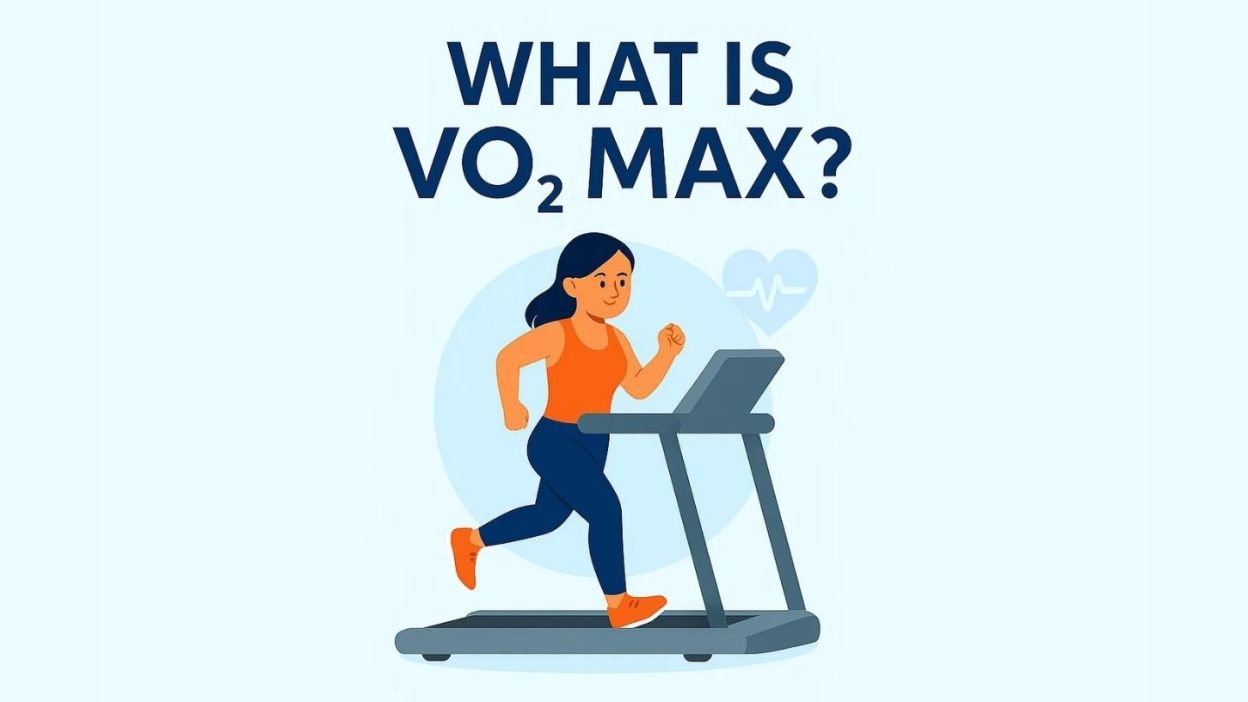
VO₂ Max is your body’s oxygen engine. It tells you how much air you can use during intense exercise—and why that matters for your endurance. Whether you’re running your first 5K or chasing a new PR, understanding VO₂ Max helps you train smarter, breathe deeper, and go farther.
Why VO₂ Max Matters
VO₂ Max isn’t just a number—it’s the gold standard for measuring aerobic fitness. It shows how efficiently your body uses oxygen during high-intensity efforts, making it a key indicator of endurance performance. Whether you’re a beginner or an Olympian, this metric helps define how far and fast you can go.
For elite athletes, a higher VO₂ Max means greater speed and stamina. For everyday runners, it reflects your cardiovascular health and training efficiency. It’s a direct link between what’s happening inside your body and how well you perform out on the road, track, or trail.
Real-life endurance—like running a 10K without stopping or keeping pace on a hilly hike—relies on how much oxygen your body can deliver to working muscles. That’s exactly what VO₂ Max tracks. It’s not the only factor, but it’s one of the clearest windows into your overall fitness capacity.
VO₂ Max Definition Explained
What Does VO₂ Max Measure?
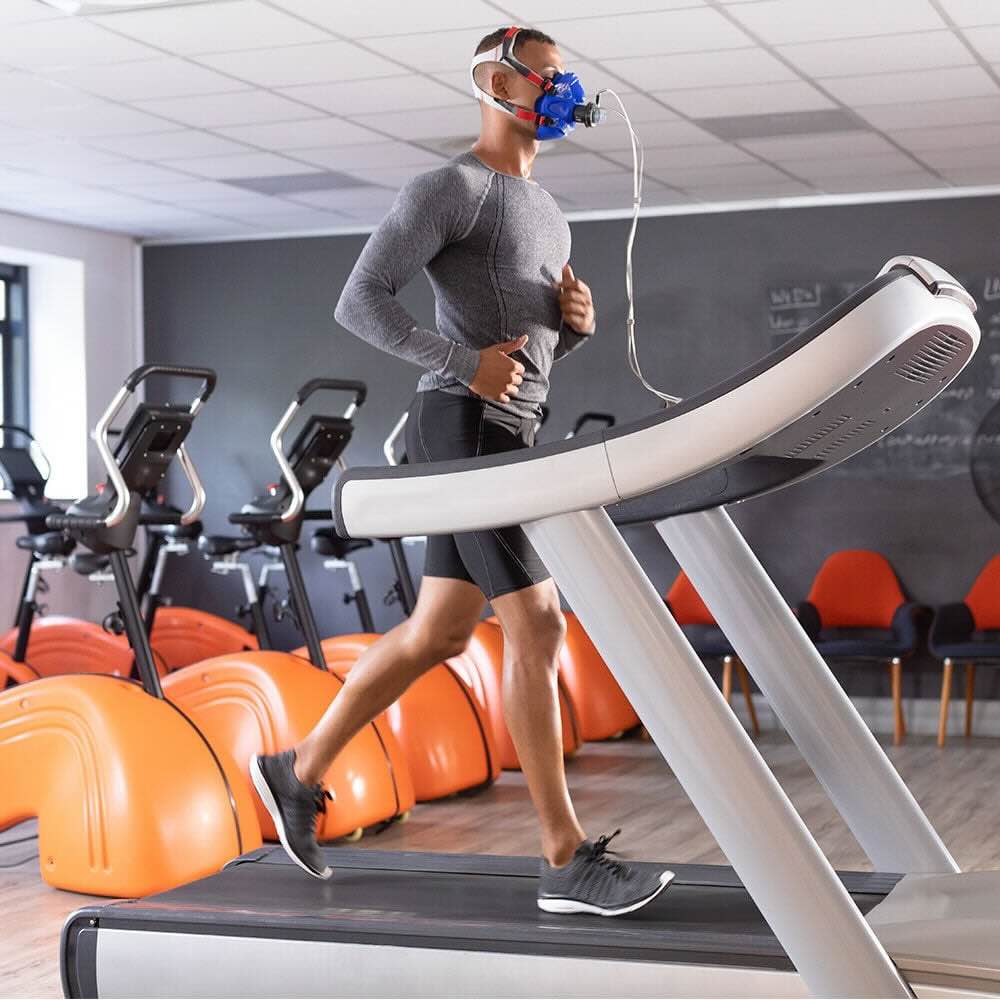
VO₂ Max stands for “maximal oxygen uptake”—the highest amount of oxygen your body can use during intense physical activity. It’s expressed in milliliters of oxygen per kilogram of body weight per minute (mL/kg/min). The higher your VO₂ Max, the more oxygen your body can deliver to muscles, making it a core measure of your cardiovascular and muscular endurance.
This single metric reflects how efficiently your heart pumps blood, how well your lungs take in air, and how effectively your muscles extract and use that oxygen. Whether you’re a casual walker or a competitive athlete, VO₂ Max gives a clear snapshot of your aerobic engine’s capacity.
The Science Behind It
Your VO₂ Max depends on the coordinated work of your heart, lungs, and muscles. First, your lungs bring in oxygen. Then, your heart pumps it through your bloodstream. Finally, your muscles absorb and use that oxygen to power movement. This process is what fuels endurance activities like running, cycling, or swimming.
The better your body is at delivering and utilizing oxygen, the longer and harder you can perform without fatigue. That’s why a higher VO₂ Max is often linked to greater endurance. Simply put, more oxygen equals more output. It’s not just about breathing harder—it’s about how efficiently your body puts that oxygen to work.
Why VO₂ Max Is Important
Athletic Performance
For endurance athletes, VO₂ Max is one of the most powerful predictors of performance. Runners, cyclists, swimmers, rowers—anyone whose sport requires sustained effort—rely on oxygen efficiency. A higher VO₂ Max means your body can generate more energy before fatigue sets in.
Each sport has its own VO₂ Max benchmarks. Elite male distance runners often reach values above 70 mL/kg/min, while top female cyclists may range between 60–70. Even for recreational athletes, tracking this metric helps fine-tune training. It can guide pacing strategies, indicate overtraining, and help forecast race times based on time-to-fatigue.
In structured training plans, VO₂ Max is often used to set training zones. These zones guide interval sessions, tempo runs, and recovery workouts so you’re training smarter—not just harder.
General Fitness & Health
Beyond the track or gym, VO₂ Max is also a strong predictor of overall health. Studies have linked higher VO₂ Max levels to better cardiovascular health, reduced risk of chronic disease, and longer lifespan. It’s essentially your body’s oxygen economy—and the more efficient it is, the healthier you tend to be.
This metric also correlates with your “fitness age.” If your VO₂ Max is significantly higher than average for your actual age, it could suggest you’re biologically younger than your birth certificate says. That makes VO₂ Max a valuable benchmark—not just for athletes but for anyone looking to live longer and move better.
How VO₂ Max Is Measured
Lab Testing
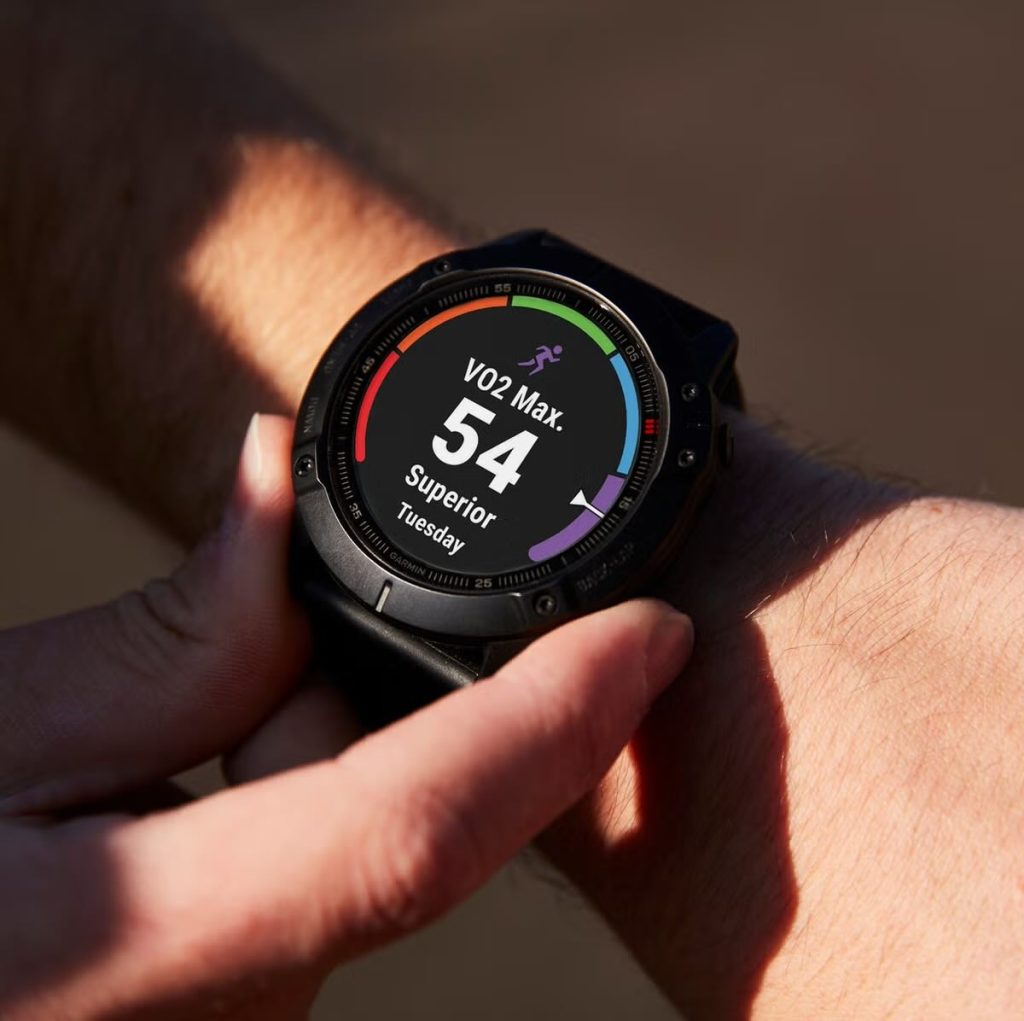
The most accurate way to measure VO₂ Max is through a controlled lab test. You’ll run on a treadmill or cycle on a stationary bike while wearing a mask that captures and analyzes your breathing. This test measures your oxygen intake and carbon dioxide output as exercise intensity increases, identifying the point where oxygen use plateaus—that’s your VO₂ Max.
Pros: Lab testing provides precise, data-driven results and is considered the gold standard in sports science.
Cons: It’s expensive, requires access to a sports performance lab, and may not be practical for most people outside of research or elite training environments.
Wearable Tech Estimates
For everyday athletes and fitness enthusiasts, smartwatches and fitness trackers offer a more accessible solution. Devices from Garmin, Apple Watch, Polar, Fitbit, and WHOOP estimate VO₂ Max using data like heart rate, pace, distance, and sometimes power output.
These estimates rely on algorithms and are surprisingly effective for tracking trends. While they’re not as accurate as lab tests, they’re useful for observing progress over time and adjusting your training zones accordingly.
Best use: Watch for improvements, plateaus, or declines. Don’t obsess over the exact number—it’s more about the direction you’re heading.
VO₂ Max Calculators & Charts
You can also estimate your VO₂ Max with field tests and online calculators. Common methods include:
- 1.5-Mile Run Test: Time yourself running 1.5 miles, then plug your result into a calculator with your age and weight.
- Rockport Walk Test: Walk one mile briskly, record your heart rate, and enter it into a VO₂ Max formula.
- Cooper Test: Run as far as possible in 12 minutes. Distance determines your score.
These tests aren’t perfect, but they offer quick, practical insights—especially when used alongside age and gender-based VO₂ Max charts to benchmark your fitness level.
VO₂ Max Charts by Age and Gender
Wondering how your VO₂ Max stacks up? Use the chart below to compare your score based on age and gender. These categories—from “poor” to “superior”—give you a clearer picture of your current fitness level and where there’s room to grow. This can also help set realistic goals for endurance training.
| Age | Male (mL/kg/min) | Female (mL/kg/min) | ||||||||
|---|---|---|---|---|---|---|---|---|---|---|
| Poor | Fair | Good | Excellent | Superior | Poor | Fair | Good | Excellent | Superior | |
| 20–29 | <35 | 35–43 | 44–50 | 51–55 | >55 | <27 | 27–31 | 32–38 | 39–48 | >48 |
| 30–39 | <33 | 33–41 | 42–48 | 49–53 | >53 | <26 | 26–30 | 31–37 | 38–46 | >46 |
| 40–49 | <31 | 31–39 | 40–46 | 47–51 | >51 | <25 | 25–29 | 30–35 | 36–44 | >44 |
| 50–59 | <29 | 29–37 | 38–44 | 45–49 | >49 | <23 | 23–27 | 28–33 | 34–41 | >41 |
| 60+ | <27 | 27–35 | 36–42 | 43–47 | >47 | <21 | 21–25 | 26–31 | 32–38 | >38 |
Use this chart to see where you land today and aim for the next category as your training progresses. Just like pace and power, your VO₂ Max is a trainable metric—it can grow with you over time.
How to Improve Your VO₂ Max
Boosting your VO₂ Max isn’t just for elite athletes—it’s a smart move for any runner, cyclist, or weekend warrior looking to build serious endurance. These proven strategies will help you train smarter, not just harder, and gradually raise the ceiling of your aerobic potential.
Interval Training (HIIT)
- Perform short bursts of high-intensity intervals (like 30 seconds to 4 minutes) followed by recovery periods
- Target Zone 4–5 effort levels to push your body’s oxygen utilization limits
- Example: 4×4 min hard running with 3 min jog between
Tempo and Threshold Workouts
- Run or ride at your lactate threshold pace (comfortably hard) to build aerobic efficiency
- Helps you maintain high effort longer before fatigue sets in
- Ideal pace: about 80–90% of your max heart rate
Long, Steady-State Cardio
- Perform long-duration sessions at a conversational pace to build your aerobic base
- Improves heart’s stroke volume and capillary density for better oxygen delivery
- Think: 60–90 minute run or bike ride at Zone 2
Strength Training Support
- Improves muscle efficiency and economy—you use less energy per step
- Focus on compound lifts: squats, deadlifts, lunges
- Especially beneficial for older athletes to offset muscle loss and fatigue
Lifestyle Factors
- Sleep and hydration are non-negotiable—your recovery shapes your performance
- Monitor iron levels, especially for women, as iron supports oxygen transport
- Altitude or hypoxic training (low oxygen exposure) can offer long-term VO₂ gains
These methods, when combined consistently, can take your fitness to the next level. It’s not about overnight gains—it’s about smart work and long-term adaptation.
VO₂ Max for Runners: Why It Matters
For runners, VO₂ Max isn’t just a number—it’s a roadmap. Whether you’re training for your first 5K or chasing a marathon PR, understanding how this metric fits into your training strategy helps you train more precisely, recover smarter, and race stronger.
Training Plans Built Around VO₂ Max Zones
- Devices like Garmin, Polar, and Strava use your estimated VO₂ Max to calculate training zones (Zone 1–5)
- Each zone corresponds to a percentage of your VO₂ Max effort and aligns with specific physiological goals (e.g., fat burn, aerobic base, speed)
- Zone-based plans guide pacing, intensity, and recovery more accurately than generic mileage plans
- Over time, adapting your workouts to your VO₂ Max zones leads to smarter gains and less burnout
Using VO₂ Max to Set Race Goals
- Your VO₂ Max score helps predict potential finish times for distances like the 5K, 10K, half marathon, and marathon
- Combine VO₂ Max with metrics like running economy and lactate threshold for even more accurate race pacing
- Online calculators (like those from Jack Daniels or Garmin Race Predictor) use VO₂ Max to fine-tune race day strategy
- Helps runners avoid going out too fast and optimizes time-to-fatigue management
In short, VO₂ Max isn’t just a measure of fitness—it’s a powerful tool for planning, pacing, and peak performance.
Common Myths About VO₂ Max
“You can’t change your VO₂ Max”
While genetics do play a role, this isn’t a fixed ceiling. Most people can improve their VO₂ Max by 15–20% with smart training. Interval sessions, tempo runs, and long aerobic workouts all stimulate the cardiovascular and muscular systems to handle more oxygen over time.
“VO₂ Max is everything”
A high VO₂ Max is valuable, but it’s just one piece of the puzzle. Your running technique, mental toughness, pacing discipline, and nutrition strategy often determine race-day success. Athletes with moderate VO₂ scores can still outperform competitors by being smarter and more efficient in their training and execution.
“High VO₂ Max = Elite Athlete”
Surprisingly, not always. Some elite endurance athletes have only average VO₂ Max numbers but excel thanks to exceptional running economy and lactate threshold. These athletes use oxygen wisely and waste less energy, proving that how you use your VO₂ is just as important as the raw number.
Frequently Asked Questions
What is a good VO₂ Max for my age?
VO₂ Max varies by age and gender. For example, a “good” score for women in their 30s is around 35–40 mL/kg/min, while for men, it’s closer to 45–50. Charts with age ranges can help you see where you fall—from poor to superior fitness categories.
Can I test my VO₂ Max at home?
Yes, many wearables like Garmin and Apple Watch provide estimated VO₂ Max based on heart rate and pace. You can also try simple field tests like the 1.5-mile run or Rockport walk and use online calculators to estimate your number.
Is VO₂ Max the same as aerobic capacity?
They’re closely related. VO₂ Max is a specific measurement of your aerobic capacity—the maximum amount of oxygen you can use during intense exercise. Aerobic capacity can also refer more generally to your overall endurance ability.
Do supplements help improve VO₂ Max?
Some supplements, like beetroot juice (nitrates), iron (if deficient), and creatine, may help indirectly by improving oxygen transport or energy output. However, training, sleep, and nutrition are far more impactful than any single supplement.
What’s the difference between VO₂ Max and lactate threshold?
VO₂ Max is your peak oxygen uptake, while lactate threshold is the point where lactate rapidly builds up in the blood. LT often predicts race performance better because it reflects how long you can sustain high effort without fatiguing.