


Muscle recovery isn’t a luxury—it’s a necessity. Too often, we chase gains but ignore the downtime our bodies need to grow stronger. In this guide, I’ll break down why rest is just as important as training, and how smart recovery strategies can unlock real, lasting fitness results.
What Happens to Your Muscles During Exercise

Every time I lift, sprint, or push through a tough workout, my muscles go through controlled chaos. Beneath the sweat and reps, tiny fibers in my muscles actually tear—microscopic, but very real. These are called microtears, and they’re not a bad thing. In fact, they’re step one in getting stronger.
When I stress my body with resistance training or high-intensity moves, it’s not just the muscles that feel it. My central nervous system (CNS) takes a hit too. It works overtime to send signals, coordinate movements, and keep everything firing in sync. That fatigue you feel post-workout? Part of it is muscular, but part is neural exhaustion.
This breakdown triggers a rebuilding process—and that’s where the magic happens. Through rest, my body starts repairing those torn fibers, making them denser, stronger, and more resilient. This is the foundation of hypertrophy: muscle growth from adaptive stress. But here’s the kicker—
Growth doesn’t happen during the workout. It happens after.
Without rest, recovery, and the right conditions, all that hard work stays stuck in limbo. This is why progressive overload—gradually increasing resistance over time—only works when it’s paired with proper recovery. Overload tears the walls down; recovery rebuilds them better.
Think of it like building a house. You don’t build the house while hammering—it’s the drying time that makes it stable. The same goes for muscles: stress sets the foundation, but recovery cements the results.
Why Recovery is the Key to Progress

If I’ve learned anything from years of trial and error, it’s this: progress doesn’t come from doing more—it comes from doing it smarter. Recovery isn’t downtime. It’s the engine room where all the gains get built. Without it, I’m just spinning my wheels.
Every intense workout breaks down muscle tissue and stresses my body’s systems. But the real transformation—growth, repair, and adaptation—only kicks in when I rest. That’s when my body rebuilds stronger, faster, and more resilient.
Skip recovery, and things start to slide. I’ve hit plateaus by pushing too hard, too often. Worse, I’ve regressed—lost strength, motivation, and sleep—all because I bought into the “no days off” mindset. More isn’t always better. More + smarter recovery? That’s the real power play.
This is where the supercompensation theory comes in. After training, my body doesn’t just return to baseline—it rebounds above it. But only if I give it the chance. If I train again too soon, I interrupt that cycle and short-circuit progress. If I wait too long, I slide backward. Timing recovery right is everything.
In the gym and in life, I’ve found that discipline isn’t just about doing more—it’s about knowing when to pause so I can level up.
Types of Recovery: Passive vs. Active

Recovery isn’t one-size-fits-all—it’s a two-lane road. There’s passive recovery when I let my body rest fully, and active recovery when I stay gently in motion to boost circulation and flush fatigue. Both are essential, and knowing when to use each one keeps me performing at my peak.
Passive Recovery
This is the deep reset—zero effort, maximum repair. I use passive recovery when my body feels taxed, sore, or mentally drained. It’s the rest that lets me fully rebuild.
- Sleep: The MVP of muscle recovery. During deep sleep, my body releases growth hormone and repairs tissue damage. I aim for 7–9 hours a night—non-negotiable.
- Rest Days: No gym, no guilt. Full rest days give muscles, joints, and the nervous system time to bounce back stronger.
- Mental Recovery: Stress drains energy just like training. I use meditation, breathwork, or a slow walk outside to decompress and refocus.
Active Recovery
When I’m not sore but still tired, active recovery gets the blood flowing without pushing me over the edge. It helps ease muscle stiffness, speed up lactic acid clearance, and mentally refresh me for the next session.
- Mobility Work: I use dynamic stretching, resistance bands, or yoga to stay limber and pain-free.
- Low-Intensity Cardio: Walking, swimming, light cycling—these gentle movements boost circulation and reduce stiffness without added stress.
- Foam Rolling: Self-myofascial release breaks up tight tissue and improves range of motion. It hurts (a little), but it works.
Smart recovery isn’t about doing nothing—it’s about doing what your body needs most. Some days that’s sleep. Other days, it’s a short hike and a mobility session. The trick is listening to the signals and giving my body what it actually asks for.
Top Signs You’re Not Recovering Enough
5 Red Flags You’re Overtraining
I’ve been there—dragging myself through workouts, thinking I’m being dedicated when in reality, I’m just burned out. If any of these signs sound familiar, it might be time to back off and rebuild with better recovery in mind.
-
1. You’re Always Tired (Even After Rest):
If I’m waking up groggy, yawning through the day, or needing extra caffeine just to function, it’s not just life stress—it’s likely a sign my body hasn’t caught up from my last workout. -
2. Your Performance Is Tanking:
Struggling to lift what used to feel easy? Slower runs? Weak grip? When I hit a plateau or regress despite training hard, it’s often because I haven’t recovered hard enough. -
3. Sleep Is All Over the Place:
Overtraining messes with my nervous system. I either can’t fall asleep, wake up constantly, or feel wired at night and exhausted by day. That disrupted cycle kills both recovery and results. -
4. You’re Moody, Anxious, or Irritable:
When I snap over little things or feel low for no reason, it’s not just in my head. Physical stress from under-recovery can mess with hormones and brain chemistry, dragging my mood down. -
5. Soreness Lingers or Injuries Keep Popping Up:
Soreness is normal—chronic soreness isn’t. If I’m constantly achy, stiff, or battling nagging pains that won’t quit, it’s a flashing sign that my muscles haven’t been given enough time to heal.
Recovery isn’t laziness—it’s protection. Ignoring these signs doesn’t build strength. It builds burnout. I’ve learned that the strongest thing I can do sometimes is rest with purpose.
How Sleep Affects Muscle Growth

If there’s one thing I refuse to sacrifice anymore, it’s sleep. Why? Because sleep is the secret weapon of muscle growth. No supplement, no superfood, and no amount of pre-workout can replace the power of real, deep rest.
During deep sleep, my body releases the highest amounts of growth hormone—crucial for repairing muscle fibers and building lean tissue. This is when all the microtears from training get stitched back together. Skip that stage, and I’m literally shortchanging my progress.
Then there’s the REM cycle, where my nervous system reboots. This stage helps regulate mood, focus, and coordination—three things I definitely need to train hard and stay injury-free. Without enough REM sleep, I feel off, slow, and disconnected in my lifts.
And here’s the kicker: poor sleep raises cortisol, the stress hormone that breaks down muscle and stores fat. When I stay up too late or sleep too little, my body shifts from building to breaking. I lose strength. I gain bloat. Everything feels harder.
That’s why I aim for 7 to 9 hours of high-quality sleep a night. It’s not always perfect, but I treat sleep like training—scheduled, prioritized, and protected. Because no matter how hard I lift, if I don’t rest right, I don’t grow right.
Nutrition’s Role in Recovery
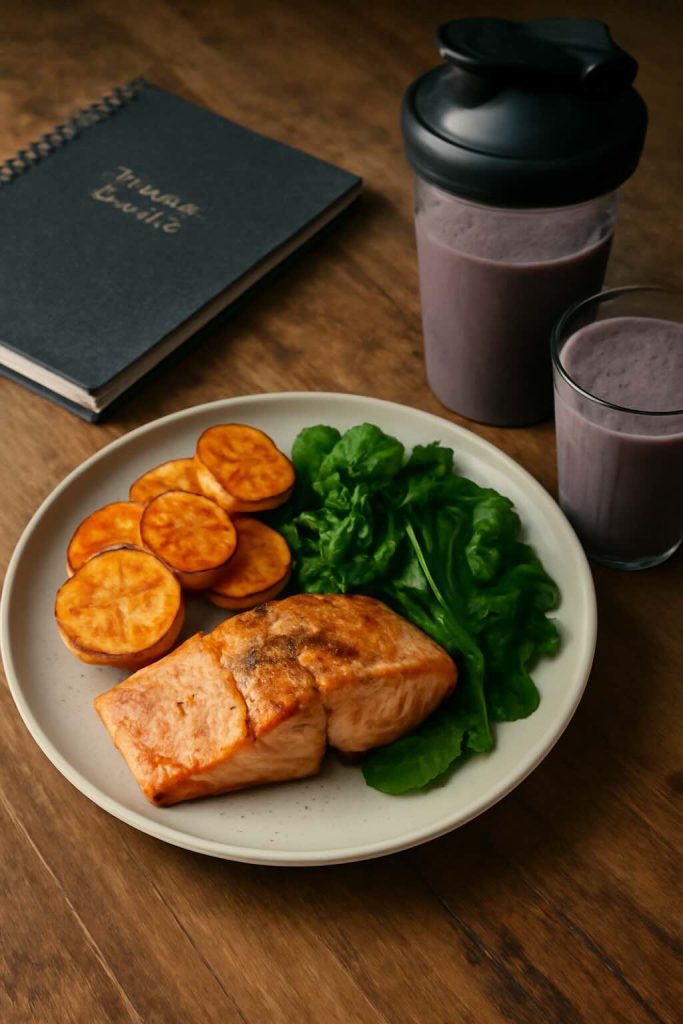
I used to think that as long as I crushed my workouts, the food would take care of itself. Big mistake. The truth is, what I eat after training directly affects how well I recover, rebuild, and come back stronger.
Let’s start with the basics:
Macronutrients That Matter
- Protein: This is my repair crew. After training, I need protein to rebuild muscle fibers. I aim for 20–30 grams post-workout to kickstart muscle protein synthesis.
- Carbohydrates: These refill my glycogen tanks—the stored energy I burn during workouts. Skipping carbs after training leaves me flat and sluggish the next day.
- Healthy Fats: While I don’t load up on fats immediately post-workout, they’re still essential for hormone health and long-term recovery.
Micronutrients & Hydration
- Magnesium & Potassium: These help prevent cramps and support proper muscle function.
- Electrolytes: Especially important after sweaty sessions. I often add sea salt or use an electrolyte tab in my water.
- Water: Recovery slows when I’m dehydrated. I keep sipping all day—not just during workouts.
What I Eat After a Workout
💪 Post-Workout Recovery Meal Ideas:
- Grilled salmon, sweet potato, and sautéed spinach
- Egg omelet with avocado and whole grain toast
- Chicken and rice bowl with roasted veggies
- Protein smoothie with banana, berries, almond milk, and a scoop of whey
- Greek yogurt with granola, chia seeds, and honey
Recovery starts on my plate. I don’t treat food like an afterthought—it’s fuel, repair, and momentum all wrapped into one. When I eat well, I train better. Period.
Tools and Techniques That Speed Up Recovery
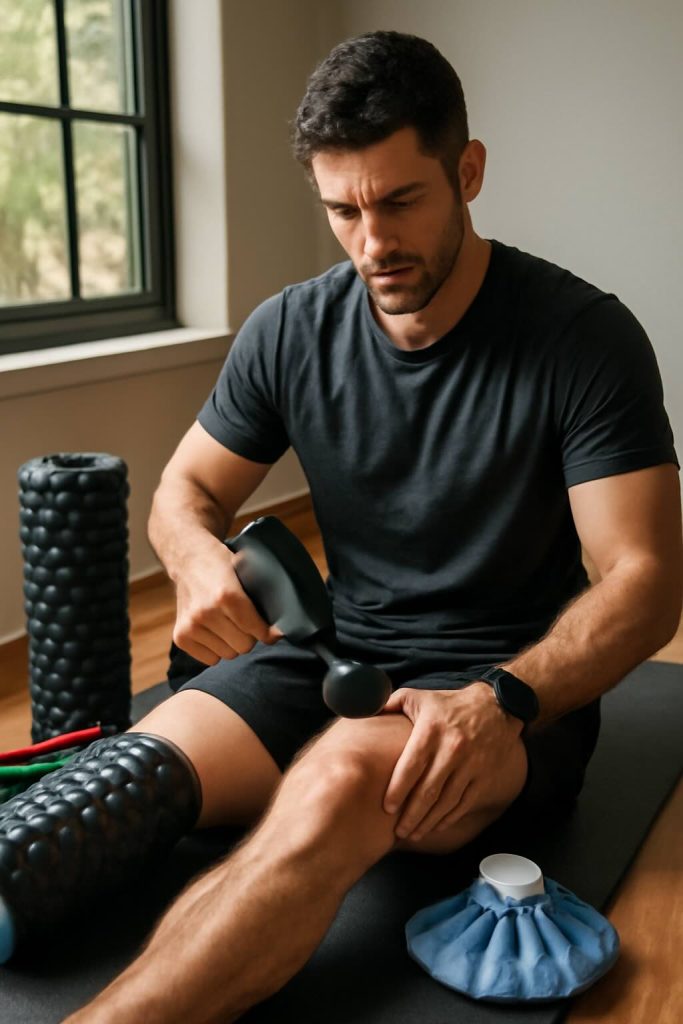
I used to think recovery just meant sitting still. Now I know better. Using the right tools and techniques doesn’t just help me feel better—it gets me back to peak performance faster. Here’s what I keep in my recovery toolbox:
- Foam Rolling: My go-to for self-massage. It loosens tight muscles, improves blood flow, and reduces soreness. I hit my quads, hamstrings, and upper back for 1–2 minutes each after tough sessions.
- Massage Guns: These deliver targeted pulses deep into my muscle tissue. Great for days when I’m extra sore or tight in specific areas like calves or glutes.
- Compression Gear: I’ll wear compression socks or sleeves after long runs or leg days to reduce swelling and speed up circulation. Feels snug, but it works.
- Cold Showers & Ice Baths: Not exactly fun—but they help calm inflammation and speed up recovery after intense workouts. I aim for 30 seconds to 2 minutes if I’m brave enough.
- Stretching & Mobility Work: I do 10–15 minutes of light stretching or band mobility to keep my joints happy. Consistency here pays off big over time.
- Breathwork & HRV Tracking: Slowing my breathing helps activate recovery mode (parasympathetic nervous system). I also track my HRV (heart rate variability) to know when to push and when to back off.
The best recovery plans aren’t passive—they’re proactive. I rotate these tools based on how I feel, what I’ve trained, and what’s coming next. The result? Fewer injuries, faster bounce-backs, and way more progress.
Sample Weekly Training + Recovery Split

It took me years to figure this out: progress isn’t just built by what I do—it’s also built by when I rest. When I started scheduling recovery with the same care as my workouts, everything changed. Less burnout. Fewer injuries. More strength. Here’s how I structure a smart week:
💥 Example: 5-Day Training + Recovery Split
- Monday – Strength: Upper Body
Focus on pushing and pulling movements (bench press, rows, shoulder press). Finish with core work. - Tuesday – Active Recovery
Light mobility drills, stretching, a walk or yoga session. No intensity, just movement to stay loose and reset. - Wednesday – Strength: Lower Body
Squats, deadlifts, lunges, hamstring work. These sessions are demanding, so recovery beforehand matters. - Thursday – Full Rest
No training. Prioritize sleep, good food, hydration, and maybe a massage or foam rolling. - Friday – Conditioning / HIIT
Short, intense workout—sprints, circuits, or kettlebell intervals. Keeps my cardiovascular system strong. - Saturday – Strength + Mobility
Lighter lift with full-body movements, then 15 minutes of focused mobility work to prep for the week ahead. - Sunday – Full Rest or Gentle Walk
I listen to how I feel. If I’m wiped, I chill. If I’ve got energy, a walk in nature keeps me moving without stress.
This isn’t about perfection—it’s about rhythm. I adapt this split if I’m sore, traveling, or swamped with work. But the framework keeps me in tune with my body instead of fighting it. And that’s the difference between burning out and leveling up.
Myths About Overtraining & Rest Days
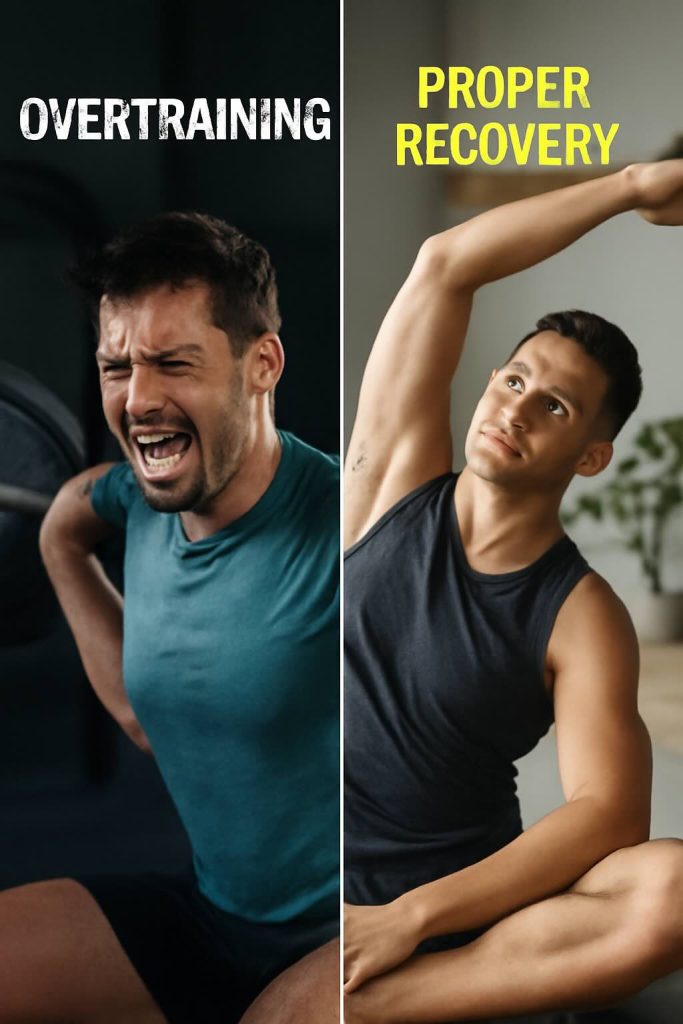
I used to believe that taking a day off meant I was slacking. Now? I know better. Rest is part of the program—not a break from it. Let’s bust some of the biggest myths I’ve had to unlearn the hard way:
-
“You’ll lose gains if you rest.”
This one’s pure fear-mongering. Missing one workout doesn’t undo progress. In fact, skipping rest does more harm than good. Your body needs time to rebuild muscle, not just break it down. -
“No pain, no gain.”
Soreness isn’t a measure of success. I’ve had some of my best training blocks with minimal DOMS. Constant soreness can mean I’m not recovering enough, not that I’m doing it right. -
“Rest days are for the weak.”
Actually, rest days are for the strong—the smart ones. Taking a break takes discipline, especially when I love to train. But if I ignore recovery, I hit walls fast: fatigue, injury, burnout. -
“Active people don’t need full rest days.”
Even athletes build in complete rest. It’s not about being lazy—it’s about letting the nervous system reset and the muscles repair fully. Moving 24/7 just leads to breaking down faster. -
“More workouts = more results.”
Quantity doesn’t beat quality. Training six or seven days straight without thoughtful recovery turns progress into punishment. I’ve learned to chase consistency—not punishment.
Bottom line: Rest days don’t ruin progress—they unlock it. They’re not a loophole in the plan. They’re the bridge between effort and results. And I’ve never made better gains than when I started training hard—and recovering harder.
How to Make Recovery a Priority (Without Feeling Lazy)

I used to beat myself up for resting. If I wasn’t sweating, I felt like I was slacking. But here’s what finally clicked: recovery isn’t a step back—it’s a setup for a comeback. The trick is changing how I think about it and building it into my routine with intention.
Reframe Rest as Progress
Recovery isn’t skipping the plan—it is the plan. When I treat rest like a performance tool, not a pause, it becomes empowering. I remind myself that growth happens during recovery, not just under the barbell.
Build Recovery into Your Lifestyle
Instead of sitting around feeling guilty, I turn rest days into wellness days. Here’s how I stay intentional:
- Journaling: I reflect on my training wins and how my body feels.
- Cooking: I prep nourishing meals that support muscle repair.
- Sleeping In: I don’t set alarms. Sleep becomes my main workout for the day.
Schedule Recovery Like a Workout
If it’s not on my calendar, it gets skipped. I literally write “REST DAY” or “RECOVERY WALK” in my training app, just like I would for a heavy lift day. It keeps me honest and balanced.
Track How You Feel
My fitness journal isn’t just for PRs. I jot down soreness levels, sleep quality, mood, and energy each day. Over time, I spot patterns—and I’ve learned to adjust my plan before burnout hits.
Recovery isn’t being lazy—it’s being strategic. When I finally started treating rest like a skill, not an afterthought, my body thanked me with better strength, clearer focus, and fewer setbacks. That’s a win in my book.
Conclusion
If there’s one lesson I’ve learned through every sore muscle, every missed PR, and every breakthrough—it’s this: training breaks you down, but recovery builds you up. Skipping rest doesn’t make me more dedicated. It makes me less effective. Real strength comes from knowing when to push and when to pause.
Recovery isn’t just about sleep or skipping the gym—it’s a full-body strategy. From the food I eat to the way I breathe, from foam rolling to rest days, every choice I make between workouts shapes the results I see in the mirror and feel in my muscles.
Progress isn’t a straight line. It’s a cycle: stress, recover, grow. The sooner I respected that rhythm, the faster I moved forward—and the longer I stayed injury-free, focused, and fired up to train again.
So here’s your reminder: take the day off when your body whispers, not when it screams. Because rest isn’t weakness—it’s the strongest move you’ll ever make.