


Stuck choosing between weights and cardio? You don’t have to. Strength builds muscle and power; cardio boosts endurance and heart health. But when you combine them smartly, they create a well-rounded, resilient body. In this guide, I’ll show you exactly how to balance both for maximum fitness gains—without burning out.
Why You Need Both Strength and Cardio

I used to think I had to pick a side—lift heavy or run far. But the truth is, strength and cardio aren’t rivals—they’re teammates. When I started training with both in mind, everything changed: my body composition, my energy, even how I felt walking up stairs.
Strength training gave me muscle, definition, and resilience. I started building a faster metabolism and stopped getting sidelined by little injuries. Lifting doesn’t just sculpt your body—it armors it.
Cardio, on the other hand, trained my heart to keep up. It boosted my stamina, helped burn fat more efficiently, and made everyday movement feel easier. Whether it’s hiking or chasing deadlines, having endurance is a game changer.
When I combine them? I don’t just look strong—I feel unshakable. Balanced training creates a body that can lift, move, and recover with ease. It’s not about being a lifter or a runner—it’s about becoming the fittest version of me.
Common Mistakes When Combining Them
When I first tried blending strength and cardio, I thought more was better. But instead of results, I got burnout. Turns out, how you combine them matters just as much as doing them. Here are the biggest mistakes I’ve made—and what I learned from each one:
-
Doing long cardio before lifting:
Starting with 45 minutes of running used to zap my strength. Cardio first is fine for endurance, but if muscle is the goal, save the lift for when you’re fresh. -
Training both hard, every day:
I once stacked HIIT and heavy squats five days a week. It crushed my energy and stalled my progress. Recovery is key. Without it, you’re just digging a deeper hole. -
Skipping strength while cutting:
I thought cardio alone would shred fat. Wrong. I lost muscle and looked “smaller” instead of leaner. Strength training preserves lean mass while you burn calories. -
Neglecting mobility and rest:
I pushed through tight hips, sore knees, and stiff shoulders—until I couldn’t anymore. Adding mobility work, stretching, and actual rest days saved my progress (and sanity).
Lesson learned? It’s not about doing everything—it’s about doing the right things at the right time. When I fixed these mistakes, the results started to show up fast—and stick around longer.
The Science: What Happens When You Mix Cardio and Strength

It’s not just about sweat and reps—there’s real science behind how strength and cardio interact. Understanding it helped me stop spinning my wheels and start training with purpose. Let’s break it down without turning it into a biology lecture.
Concurrent training is the term for combining resistance training and aerobic exercise in a single plan. Done right, it can build endurance and muscle simultaneously. Done wrong, and one can interfere with the other.
Here’s what’s happening inside my body:
- Cardio activates AMPK—a pathway that boosts endurance, burns fat, and improves heart health.
- Strength training activates mTOR—a pathway that drives muscle growth and strength.
The catch? AMPK and mTOR can compete. Too much cardio, especially high-intensity or done at the wrong time, may blunt the strength-building effects of lifting.
That’s where recovery steps in. When I give my body enough time—and the right fuel—it can adapt, grow, and improve across both systems. But without recovery? Gains stall, fatigue rises, and frustration builds.
The good news? With smart programming, I can get the best of both worlds. Cardio keeps my heart strong. Strength builds power and lean mass. Recovery ties it all together. It’s not about choosing one—it’s about choosing better timing, smarter pairings, and respecting the process.
How to Structure Your Week

Trying to juggle cardio and strength without a plan? I’ve been there. It’s like doing a puzzle without the picture on the box. Once I learned to structure my week, I saw real gains—more strength, better endurance, and way less burnout. Here’s how I make it work.
💡 3 Smart Ways to Combine Strength and Cardio
-
Same Day, Split Sessions:
I do cardio in the morning and lift in the evening (or vice versa). This gives my body time to reset between the two. Great for advanced goals or if I train twice daily. -
Alternate Days:
Strength on Mon/Wed/Fri, cardio on Tues/Thurs. This is my go-to for balance. It gives each system its own spotlight and plenty of recovery time. -
Hybrid Workouts:
I blend both in one session—think supersets with sprints, kettlebell circuits, or EMOMs. It saves time and keeps things spicy, but I only do this 1–2x per week to avoid overtraining.
🎯 Match Intensity with Intent
Here’s a rule I live by: don’t lift heavy on the same day you crush HIIT. If I go hard with one, I keep the other light. It’s about managing stress, not stacking it.
🗓 Weekly Breakdown Tip:
- High-effort strength? Pair it with light walking or mobility.
- Hard cardio? Save heavy lifts for the next day.
- Feel fried? That’s a signal—not a weakness. I schedule recovery like a workout.
Bottom line: when I treat training like a rhythm instead of a race, my results finally start to flow.
Cardio Timing: Before or After Weights?

One of the first questions I asked when I started combining cardio and strength was: should I do cardio before or after lifting? The answer depends on my goals—and now I treat it like a strategy, not a guessing game.
🏋️♂️ Goal: Build Strength or Muscle
Do cardio after weights. If I lift when I’m fresh, I can push heavier, stay focused, and preserve strength. Cardio afterward still burns fat and improves heart health, without interfering with muscle gains.
🏃♀️ Goal: Improve Endurance or Conditioning
Do cardio first. If running a race or boosting stamina is my main goal, I prioritize cardio while my energy is high. I keep strength work lighter and focus on form, not max weight.
⚡ Goal: General Fitness or Fat Loss
Either order works, but I always match intensity to energy. On low-energy days, I lift first and walk after. On high-energy days, I’ll flip it and do intervals before a moderate strength session.
🔥 The “Never Do This” Rule
Never do high-intensity cardio right before heavy strength work. It drains my nervous system and kills my lifts. If I want to go all-out on both, I split them into two sessions (AM/PM) or different days.
Takeaway? It’s not about right or wrong—it’s about choosing the right order for what matters most that day.
Best Strength Workouts for Hybrid Fitness
When I’m balancing strength and cardio, I don’t waste time on fluff. Every lift has to work double duty—building muscle while supporting movement and endurance. That’s where hybrid strength workouts come in. They’re fast, functional, and ridiculously effective.
🏋️ Focus on Compound Lifts
These moves hit multiple muscle groups at once and keep my heart rate up without turning the session into cardio:
- Squats (barbell, goblet, or Bulgarian split)
- Deadlifts (Romanian, sumo, trap bar)
- Push Press or Dumbbell Overhead Press
- Pull-Ups or Rows (inverted, barbell, dumbbell)
- Farmer Carries and Loaded Carries
⏱ Supersets for Efficiency
To save time and keep intensity high, I pair upper and lower body moves back-to-back with minimal rest. For example:
- Front Squats + Pull-Ups
- Deadlifts + Push-Ups
- Lunges + Dumbbell Rows
These burn calories, challenge stability, and build grit—all in less time.
🔥 EMOMs and AMRAPs
For days when I want strength + sweat, I use these formats:
- EMOM (Every Minute on the Minute): Do a lift at the top of each minute, rest the remainder. Great for volume with structure.
- AMRAP (As Many Rounds As Possible): Set a timer and cycle through 3–4 strength moves for time. It tests endurance without losing the lifting edge.
Bottom line: I don’t need to live in the weight room to get strong. I just need to lift smart, stay consistent, and train with purpose. These workouts build muscle, improve work capacity, and leave me feeling like a total machine.
Best Cardio Options (LISS, HIIT, and Functional)

When I used to think of cardio, I pictured endless treadmill runs—and honestly, I dreaded it. But once I learned how to mix different cardio styles, everything changed. Now, cardio actually supports my strength goals instead of stealing from them. Here are the three styles I rotate through:
🚶 LISS (Low-Intensity Steady State)
This is my go-to for recovery days or pairing after a heavy lift. Think walking on an incline, easy cycling, or a slow jog. It’s low stress, improves fat burning, and helps flush out soreness without taxing my system.
- Great for active recovery
- Can be done fasted or post-lift
- Helps boost endurance and blood flow
⚡ HIIT (High-Intensity Interval Training)
When I want to get in and out fast with max effort, HIIT delivers. I push hard for 20–40 seconds, then rest or go light. It ramps up fat burn and keeps my metabolism revved for hours.
- Sled pushes, battle ropes, sprints, kettlebell swings
- 2–3x/week max (too much kills strength gains)
- Best on non-lifting days or far apart from heavy lifts
💪 Functional Conditioning
This is my favorite way to blend cardio and strength. It builds work capacity, coordination, and athleticism. I add short bursts at the end of strength days or dedicate a full session.
- Rowing, jump rope, air bike, med ball slams
- Great for circuits or EMOMs
- Burns fat while keeping muscles engaged
The key? I don’t rely on just one type of cardio. I mix LISS for recovery, HIIT for intensity, and functional moves for total-body power. That variety keeps training fresh and results steady.
Rest, Recovery, and Adaptation

If there’s one thing that took me way too long to figure out, it’s this: recovery isn’t optional—it’s the edge that makes everything else work better. Lifting hard and hitting cardio sessions means nothing if I’m not giving my body time to adapt and rebuild.
🧠 Why Recovery Is Your Secret Weapon
Muscle doesn’t grow during training—it grows during rest. Endurance doesn’t improve mid-run—it improves while I sleep. Recovery is when the gains actually happen. Without it, I stay stuck, sore, and sluggish no matter how much effort I throw at my workouts.
🛌 Rest Days or Active Recovery?
- Full rest days: I take at least one per week. No lifting, no cardio. Just sleep, stretch, and breathe.
- Active recovery: Light walks, yoga, mobility drills. These help flush out fatigue without adding more stress.
🧰 My Go-To Recovery Tools
- Foam Rolling: Helps reduce tightness and improve range of motion
- Sleep: 7–9 hours is non-negotiable if I want real results
- Nutrition: I fuel with protein, complex carbs, and anti-inflammatory foods to repair and recharge
🚩 Signs I’m Overtraining
- Persistent fatigue, even after sleep
- Weaker performance or plateaued strength
- Low motivation, brain fog, or mood swings
- Lingering soreness or recurring aches
The takeaway? Recovery isn’t lazy. It’s the smartest, strongest move I can make. When I listen to my body, respect its limits, and give it what it needs, I don’t just train hard—I evolve.
Sample Weekly Training Plan
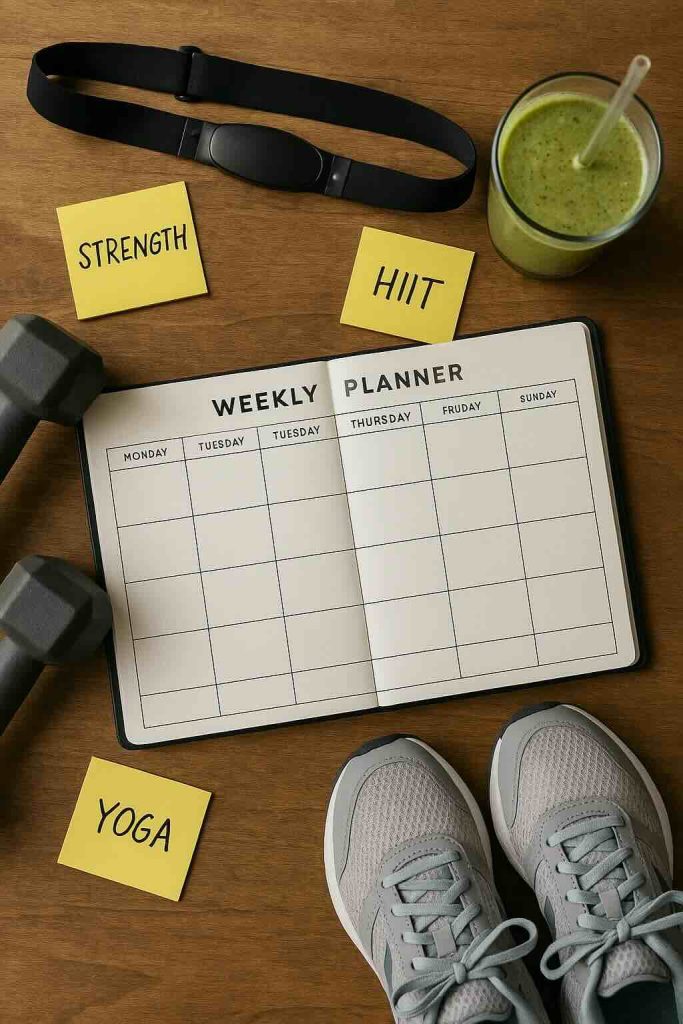
When I finally stopped winging my workouts and started planning with purpose, the results spoke for themselves. This 7-day training structure blends strength, cardio, and recovery so I stay lean, strong, and energized—without burning out.
🗓️ 5-Day Balanced Routine
-
Monday – Upper Body Strength + LISS
Push/pull day: bench press, rows, overhead press. Finish with 20 minutes of incline treadmill walking or light cycling. -
Tuesday – HIIT + Core
Sprint intervals or air bike Tabata (20s on, 10s off x 8). Then 3 rounds of planks, hanging leg raises, and Russian twists. -
Wednesday – Lower Body Strength
Squats, RDLs, lunges, hip thrusts. I go heavier here and keep cardio out of it to focus on power. -
Thursday – Active Recovery
Gentle yoga, long walk, or mobility work. This is where I reset and let the previous days sink in. -
Friday – Full-Body Strength + Functional Finish
Deadlifts, kettlebell swings, push-ups, pull-ups. Wrap it up with sled pushes or battle rope intervals. -
Saturday – Optional Conditioning or Fun
Hike, swim, group fitness class, or a long bike ride. If I feel good, I move. If I’m dragging, I rest. -
Sunday – Full Rest
No lifts. No cardio. Just eat well, hydrate, sleep in, and let my body fully recover.
This plan isn’t rigid—it’s a rhythm. I adjust based on how I feel, how I sleep, and what’s coming up in life. But having this framework keeps me consistent and makes sure I’m hitting strength, cardio, and recovery every week—without guessing.
Conclusion
If there’s one thing I’ve learned through trial, error, and a few too many burnout weeks—it’s this: it’s never about cardio vs strength. The real win comes when I combine both with purpose.
Cardio keeps my heart healthy, burns fat, and builds stamina. Strength training sculpts muscle, boosts metabolism, and makes me more resilient. But when I plan them together—without letting one steal from the other—I get leaner, stronger, and more energized than ever.
The key? Smart structure. I train with intensity, rest with intention, and adjust when life demands it. No more guessing. No more going all-in on one thing while the other slips. Just a balanced, sustainable rhythm that fuels real progress—without the crash.
Stronger muscles. Better lungs. Sharper focus. That’s the power of training smart, not just hard.