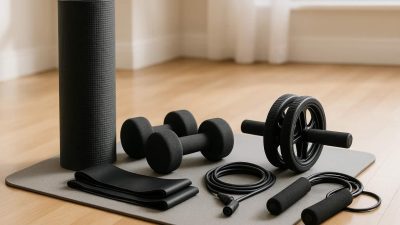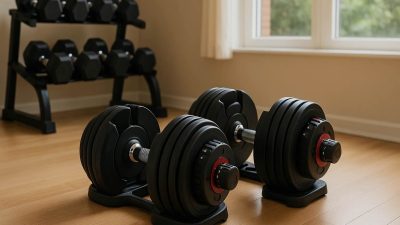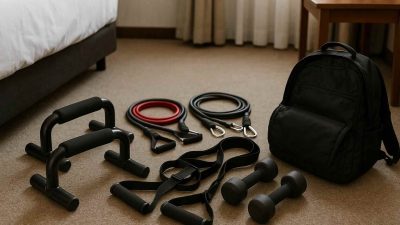

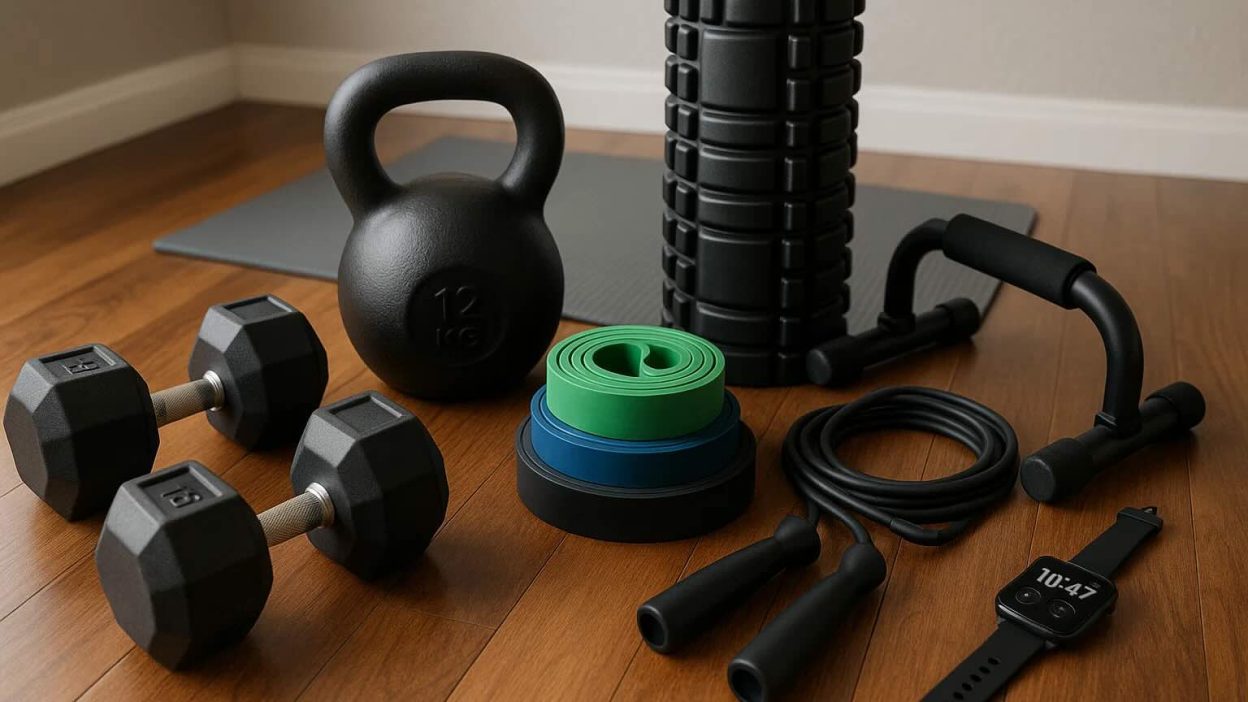
You don’t need a fancy gym to get fit—just the right tools in the right space. I’ve tested compact, effective gear that transforms any room into a results-driven workout zone. From resistance bands to smart tech, here’s what actually works to elevate your at-home fitness game.
Resistance Bands: Portable Power for Every Muscle
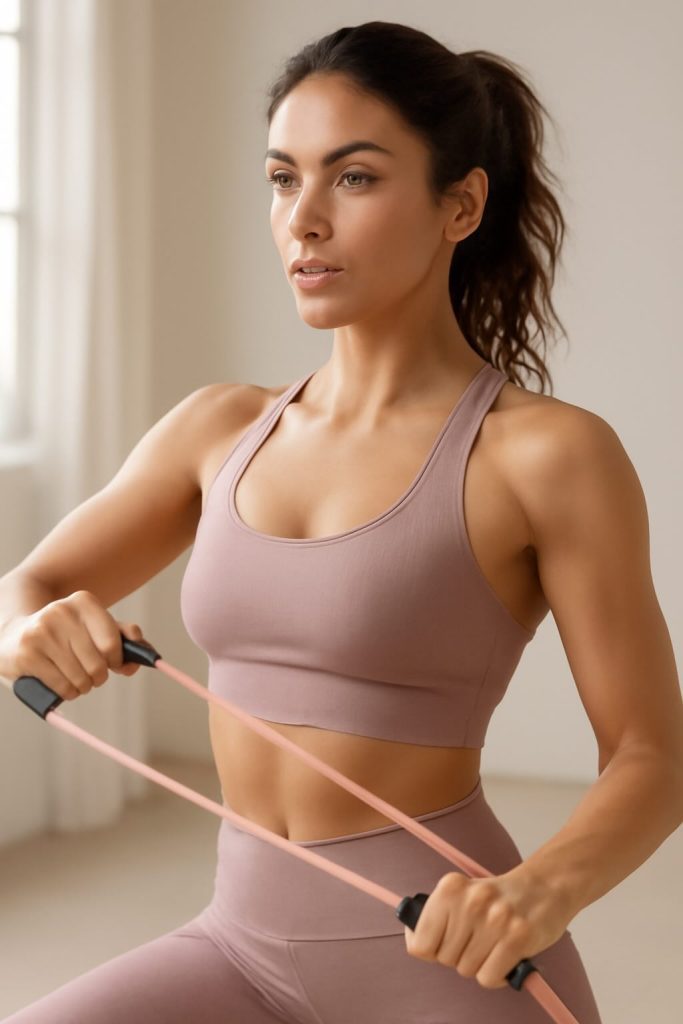
Don’t let their simple look fool you—resistance bands pack a serious punch. I’ve used them for strength, rehab, and mobility, and they’ve earned a permanent spot in my gear drawer. Whether I’m short on time or space, bands deliver big results with almost zero setup.
Loop, Tube, and Therapy Bands—What’s the Difference?
- Loop bands: Great for lower-body moves like squats, glute bridges, and lateral walks. They stay put and add burn without bulk.
- Tube bands with handles: Perfect for presses, rows, curls, and pulls. These mimic dumbbell moves and come with door anchors for more variety.
- Therapy bands (long strips): Used for gentle stretching, rehab, or Pilates-style flows. They’re the lightest resistance and best for mobility work.
Why I Love Them for At-Home Training
- Strength training: Add resistance to classic moves like push-ups, lunges, and deadlifts without needing weights.
- Rehab and recovery: Bands are low-impact and perfect for easing back into movement after an injury.
- Mobility work: Stretch your shoulders, hamstrings, and hips with more control and tension.
Big Gains in a Small Package
Bands are ridiculously compact. I roll mine into a drawer, toss them in a gym bag, or pack them for travel. They’re also affordable—under $30 for a full set.
Try This 5-Minute Band Circuit
- 20 banded squats
- 15 band rows (with door anchor)
- 12 lateral band walks (each direction)
- 15 banded glute bridges
- 30 seconds shoulder band pull-aparts
Rest 30 seconds and repeat twice. Your muscles will feel it—trust me.
Dumbbells: The All-Purpose Strength Tool
If I could only pick one piece of gear for my home workouts, dumbbells would win—hands down. They’re classic, effective, and endlessly versatile. From full-body strength sessions to focused isolation moves, dumbbells do it all without hogging floor space.
Adjustable vs. Fixed Dumbbells
- Fixed dumbbells: These are the traditional, no-fuss option. Just grab and go. Great if you’ve got a rack or plenty of room for multiple pairs.
- Adjustable dumbbells: Space-savers that let you change weights with a twist or dial. Perfect for small spaces or if you’re on a budget and want more variety.
Moves That Make Dumbbells a Must
- Arms: Bicep curls, tricep kickbacks, hammer curls
- Shoulders: Shoulder presses, lateral raises, front raises
- Chest: Chest presses, flys (on a bench or floor)
- Legs: Goblet squats, lunges, Romanian deadlifts
Smart Storage for Small Spaces
If you’re like me and hate clutter, a vertical dumbbell rack or under-bench storage can save serious space. Adjustable sets often come with compact cradles too, which makes cleanup fast and easy.
Buying Tips from Experience
- Weight range: Beginners should start with 5–20 lb pairs. More advanced? Go for a set that scales to 50 lbs or higher.
- Grip style: Rubber-coated handles are comfy and non-slip. Knurled steel grips offer precision and a firmer hold for heavy lifting.
- Shape: Hex dumbbells won’t roll—trust me, you’ll be glad when you’re mid-workout.
Kettlebells: Functional Strength Meets Flow
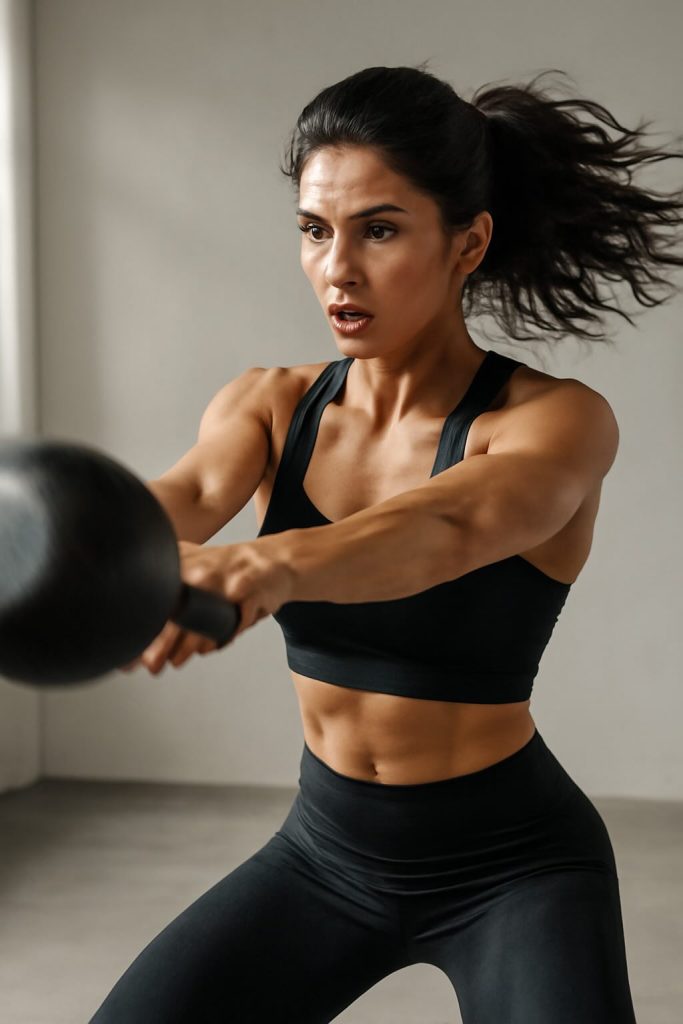
There’s something primal and powerful about training with kettlebells. The way they move, the muscles they hit—it’s not just a workout, it’s a rhythm. I use kettlebells for building raw strength and explosive power, all without needing a rack full of weights.
Why Kettlebells Hit Different
- Swings: This signature move blasts your posterior chain—glutes, hamstrings, and back—while firing up your cardio engine.
- Squats: Goblet squats with a kettlebell target your legs and core, encouraging better posture and balance.
- Core Work: Moves like Turkish get-ups, windmills, and kettlebell twists sculpt your midsection with every rep.
Compact but No Less Brutal
One kettlebell can replace a whole slew of gym machines. It sits quietly in a corner but hits hard in every session. Whether I’m working with a 20-pounder or a 50, I always break a sweat fast.
Why Not Just Use Dumbbells?
- Center of gravity: Kettlebells pull weight away from your hand, challenging stabilizer muscles in a totally different way.
- Flow & momentum: They’re ideal for dynamic movements that involve swings, pulls, and transitions between exercises.
- Wrist-friendly grip: For certain presses and snatches, kettlebells offer more ergonomic angles than dumbbells.
Choosing the Right Weight and Grip
- Start light: For beginners, 8–12 kg (18–26 lbs) for men and 6–8 kg (13–18 lbs) for women is a solid range.
- Handle width: Make sure you can fit both hands comfortably for two-handed swings.
- Finish: Powder-coated or cast-iron grips are ideal—slick chrome ones get slippery fast.
Suspension Trainers (TRX): Full-Body Bodyweight Mastery
If you want to feel muscles you didn’t know you had, grab a suspension trainer. I’ve used mine in tight spaces, hotel rooms, and outdoor setups—it never disappoints. TRX-style systems use just your bodyweight and gravity to build serious strength, stability, and control.
Core, Balance, and Flexibility—All in One
- Core: Every movement demands midsection control, whether you’re doing planks, rows, or push-ups.
- Balance: The instability of the straps forces stabilizers to kick in—great for joint health and coordination.
- Flexibility: Use it for assisted stretches that go deeper without straining your muscles.
Simple Setup, Serious Challenge
All you need is a sturdy anchor—a door, beam, or ceiling hook. It takes less than a minute to hang and adjust. I’ve used mine in apartments, garages, and even wrapped it around a tree branch outside.
Beginner to Beast—It Scales with You
- Beginners: Keep your feet planted and stay upright for safer, low-angle movements.
- Intermediate: Mix in lunges, single-arm rows, and push-ups with added instability.
- Advanced: Add jump squats, suspended planks, and atomic push-ups to spike intensity.
Lightweight and Travel-Ready
This is one of my favorite tools to pack on trips. It folds into a small pouch and weighs under two pounds. Whether I’m working out in a hotel, park, or home office, I know I’ve got a full gym in my bag.
Yoga Mat: More Than Just Stretching
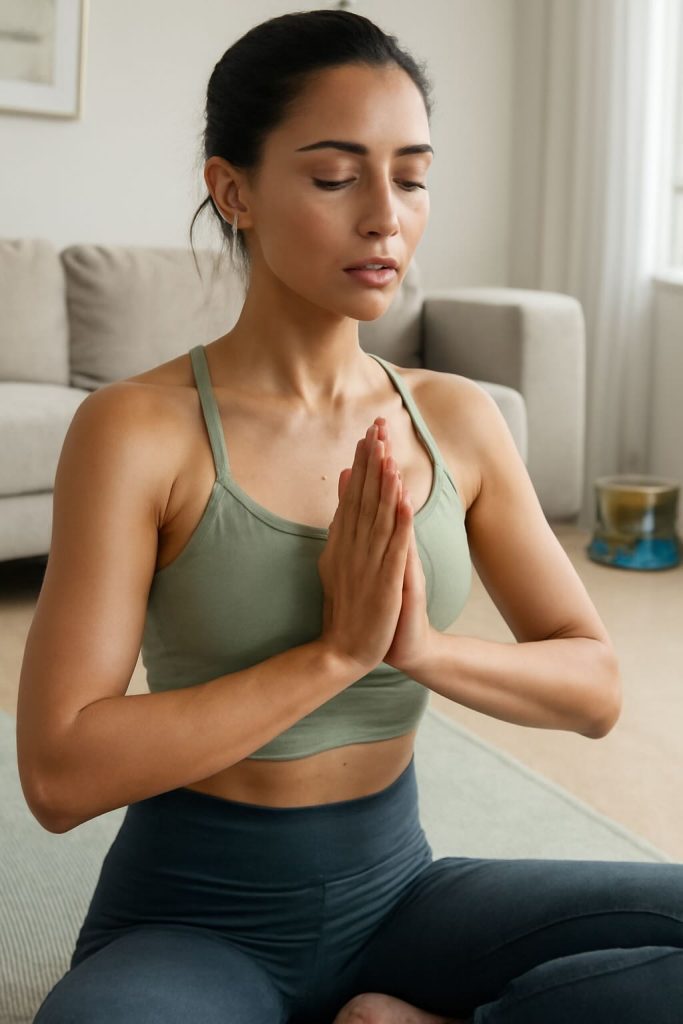
My yoga mat isn’t just for downward dogs—it’s the foundation for almost every workout I do at home. Whether I’m flowing through a vinyasa, stretching tight hips, or powering through a core circuit, a good mat makes all the difference.
One Mat, Many Moves
- Yoga: From beginner poses to advanced balances, it provides comfort and grip where it matters most.
- Stretching: A cushioned surface protects your joints and spine during cooldowns and mobility drills.
- Core workouts: No more slipping during planks, crunches, or leg lifts—this mat keeps you grounded.
Grip and Cushion: Get the Balance Right
Not all yoga mats are created equal. I prefer one that’s at least 5mm thick—soft enough for comfort, but not so squishy that it messes with balance. A textured, anti-slip surface keeps sweaty hands and feet from sliding mid-pose.
For Every Workout Type
Even when I’m not doing yoga, I still use my mat. It’s perfect for bodyweight training, foam rolling, and even standing dumbbell sets when I want a little extra cushioning. If your floor’s hard or slippery, this is non-negotiable.
Roll It, Store It, Use It Daily
When I’m done, it rolls up neatly into a closet corner or hangs on a wall hook. Lightweight and easy to carry, it’s a no-fuss essential I reach for almost every day. Bonus points if it’s cute enough to match your space!
Foam Roller: Recovery and Mobility Hero
If you’ve ever felt sore, stiff, or tight after a workout—foam rolling is your fix. I reach for mine before and after every session. It’s like a deep tissue massage without the price tag, and it’s become a non-negotiable part of my recovery routine.
Why Foam Rolling Works
- Myofascial release: It targets muscle knots and tight connective tissue to improve mobility and blood flow.
- Muscle recovery: A few minutes of rolling helps flush out lactic acid, easing soreness after intense workouts.
- Flexibility booster: Regular use loosens up hips, hamstrings, and shoulders—key for pain-free movement.
Pick Your Texture: Smooth vs. Spiky
- Smooth rollers: Best for beginners or sensitive muscles. Gentler pressure and ideal for daily use.
- Textured rollers: Think ridges or bumps that dig deeper into tight spots. Great for stubborn knots and advanced users.
When to Use It: Before or After?
I roll for 5 minutes before a workout to warm up tight muscles, and again after to cool down and recover. Focus on major muscle groups—quads, glutes, calves, back—and breathe through the tension. It hurts so good.
Compact and Always Worth It
Foam rollers don’t take up much space, and you’ll feel the difference almost instantly. Whether you’ve crushed leg day or just sat too long at your desk, rolling resets your body and gets you moving better—fast.
Smart Fitness Tools: Tech That Tracks Progress
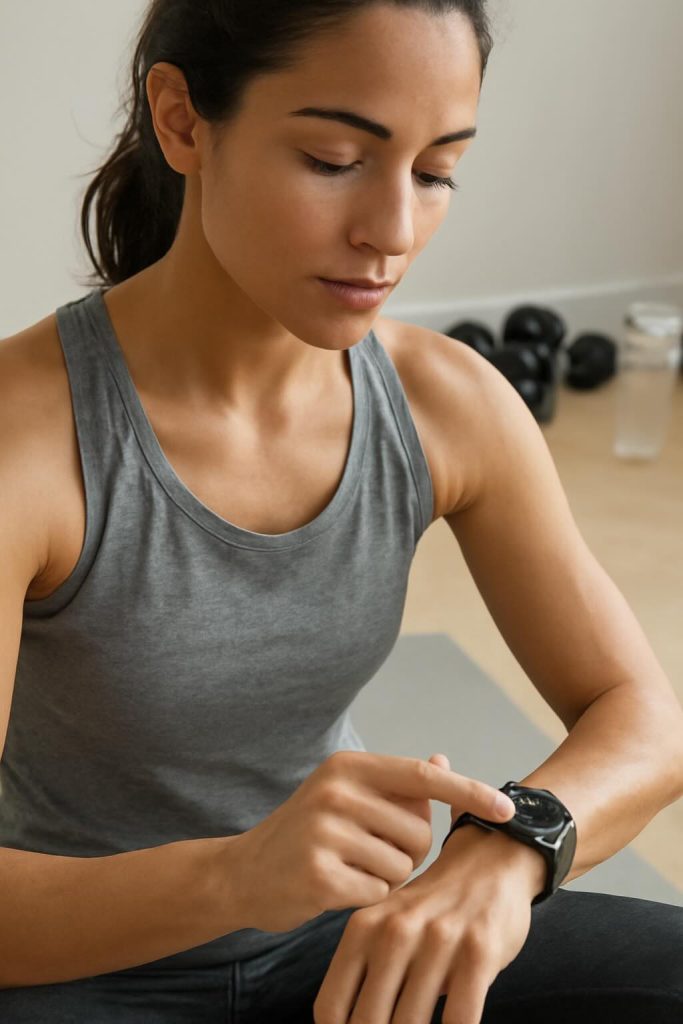
When it comes to staying consistent, data is my secret weapon. Smart fitness tools don’t just track—they coach, correct, and keep me accountable. Whether I’m measuring heart rate, checking body fat, or syncing workouts, the tech keeps me locked in and leveling up.
Trackers That Tell the Truth
- Fitness trackers: I use mine to count steps, log workouts, and monitor sleep—all the behind-the-scenes stuff that affects recovery and progress.
- Heart rate monitors: These give real-time feedback during cardio and strength sessions so I can hit the right zones for fat burn, endurance, or recovery.
Smart Scales That Go Beyond Pounds
A regular scale tells you weight. A smart scale shows what that weight is made of—body fat, muscle mass, water retention, and even metabolic age. I check mine weekly to spot trends, not just numbers.
Apps + Connected Gear = A Smarter Setup
- Smart mirrors: Like having a personal trainer in your living room, guiding form and streaming workouts live.
- Smart dumbbells: Track reps, weight, and rest times. Some even auto-adjust based on your progress.
- Workout apps: I use them to program routines, follow challenges, and stay on schedule—even when motivation dips.
How Tech Builds Consistency
The more I track, the more I improve. Seeing streaks, stats, and progress graphs gives me that extra nudge to stay active. It’s not about perfection—it’s about momentum, and smart tools help me maintain it without second-guessing my effort.
Jump Rope: Cardio Without the Clutter
Jumping rope isn’t just for playgrounds—it’s one of the most effective, no-fluff cardio tools I’ve used. It spikes your heart rate, scorches calories, and sharpens coordination in minutes. Whether I’m warming up or squeezing in a quick HIIT session, my jump rope is always within reach.
Fast-Paced, Fat-Burning Workouts
- HIIT sessions: Try 30 seconds of double-unders followed by 30 seconds rest. Repeat for 10 minutes and you’ll be dripping sweat.
- Warm-ups: A few light rounds get my body moving, blood flowing, and joints primed—no treadmill required.
Speed Rope or Weighted Rope?
- Speed rope: Best for fast footwork and cardio endurance. I use it for agility and rhythm-based routines.
- Weighted rope: Adds intensity and engages the upper body. Great for shoulder strength and muscle endurance.
Small Tool, Big Burn
I can torch 200–300 calories in 15 minutes with the right pace. Plus, it builds timing, balance, and full-body coordination—key for any type of training. Jumping rope is one of those “simple but savage” tools that never goes out of style.
Perfect for Travel and Tight Spaces
I toss mine into my gym bag, suitcase, or desk drawer. It weighs next to nothing and takes up less space than a water bottle. When I’m short on time or room, this is my go-to.
Mini Stepper or Under-Desk Bike: Small-Space Cardio
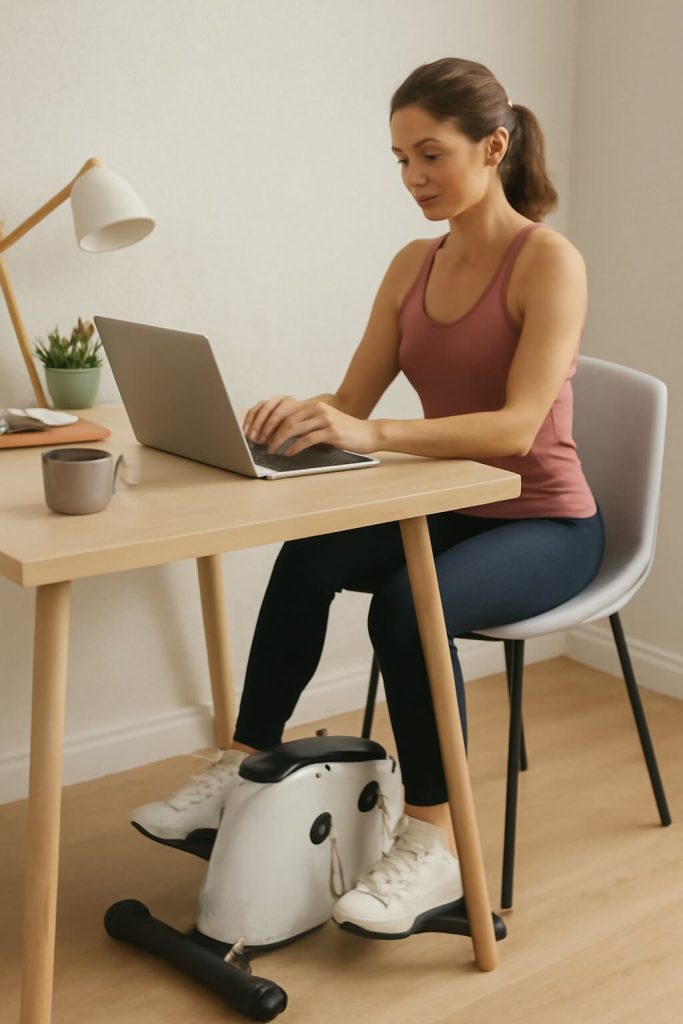
When space is tight and time’s even tighter, I turn to compact cardio tools like mini steppers and under-desk bikes. They’re perfect for getting in movement without rearranging furniture—or your schedule. No excuses, just motion.
Low-Impact Movement That Adds Up
These machines are gentle on the joints but still get your heart rate up. I use mine during long work sessions or as a quick warm-up before strength training. It’s effortless to sneak in steps or pedal while watching TV or replying to emails.
Multitasking Made Healthy
- Work-from-home win: I pedal through meetings, and no one even notices. My legs are moving while my hands stay free.
- Pre-workout warm-up: Five minutes on the mini stepper gets my blood flowing and body ready to lift.
Quiet, Foldable, and Travel-Friendly
No motors, no noise—just smooth, silent movement. These tools fold up or roll into a closet when not in use. I even take my under-desk bike on road trips if I know I’ll be stuck in a hotel for a few days.
Ideal for Apartment Living
If you’re living in a small space or on an upper floor, these are cardio lifesavers. No loud jumping, no shaking floors, no need for bulky treadmills. Just simple, steady motion you can do any time of day.
Core Sliders: Small Discs, Big Burn
Don’t underestimate these little discs—they may be lightweight, but they bring serious heat. I use core sliders when I want to take bodyweight exercises to the next level. They’re perfect for abs, glutes, legs, and everything in between.
Slide into Stronger Workouts
- Abs: Moves like mountain climbers, knee tucks, and pikes on sliders demand full core engagement.
- Lunges: Sliding reverse lunges and side lunges add control, balance, and deep muscle activation.
- Full-body flows: Combine push-ups, planks, and glider burpees for high-intensity circuits.
Works on Any Surface
I’ve used mine on carpet, hardwood, even hotel floors. Most come double-sided—one smooth for rugs, one cushioned for slick floors. Just flip and go.
Tiny Size, Huge Versatility
They weigh almost nothing and fit in any bag, drawer, or suitcase. I toss them in when I travel or want a fast home workout that doesn’t need weights.
Boosts Bodyweight Routines
Core sliders add instability and extra range of motion to even basic moves. That means more muscle activation with less impact—especially helpful for joints. Trust me, a 30-second slider plank feels like a minute.
Bonus: Storage and Organization Ideas
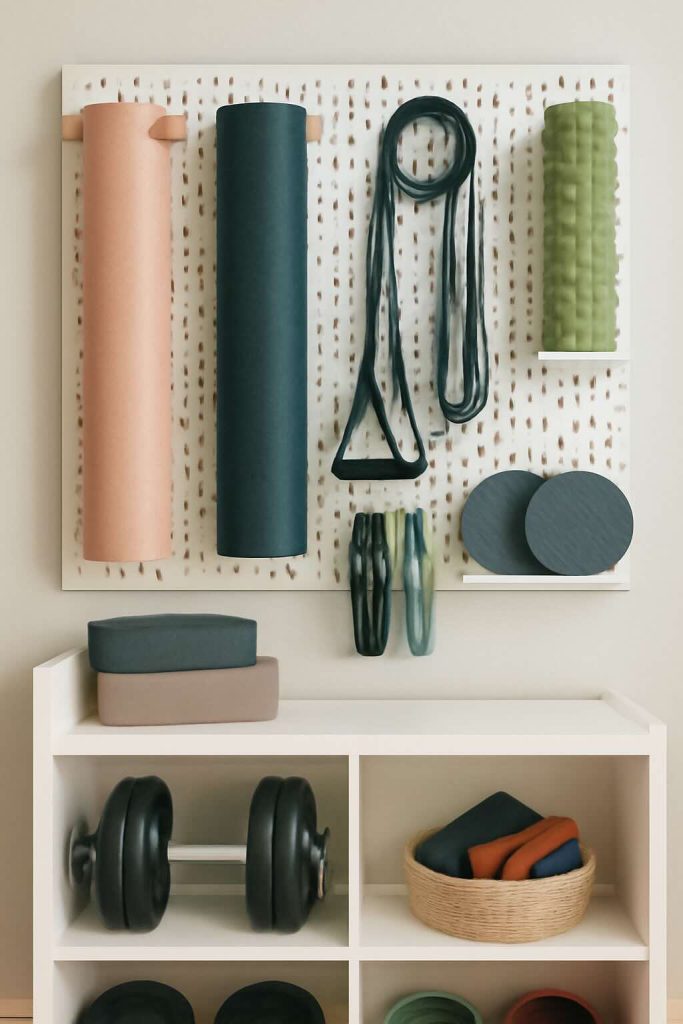
Let’s be real—when my workout space gets messy, my motivation tanks. But when everything’s in its place? Game on. Organizing your home gym isn’t just about aesthetics—it keeps your flow tight, your gear ready, and your head in the game.
Wall-Mounted Racks and Bins
- Vertical storage: I use wall hooks for resistance bands, suspension trainers, and jump ropes. They stay untangled and easy to grab.
- Bins and baskets: Perfect for foam rollers, sliders, and mini gear. I label each one so nothing gets lost in the shuffle.
Foldable Benches and Adjustable Gear
- Foldable benches: I love mine—it folds flat under the bed or behind a door and still supports serious weight.
- Adjustable dumbbells and kettlebells: These swap multiple pieces of equipment for one compact solution. Less clutter, more options.
Why Tidy Gear = Consistent Workouts
When I don’t have to dig through a pile of stuff, I start faster, train harder, and feel more in control. Plus, it cuts down on “I’ll work out later” excuses. Out of sight might be out of mind—but visible, organized gear? That’s instant accountability.
Storage That Sparks Motivation
A clean, functional space feels like an invitation. Whether it’s a small shelf, pegboard, or dedicated gym nook, smart storage sets the tone. I treat it like a mini sanctuary—not just where I train, but where I recharge and reset.
How to Choose the Right Gear for Your Goals
Before you fill your cart with flashy fitness gadgets, take a breath. I’ve made that mistake—buying too much, too fast. The truth? The best gear is the stuff that fits your space, your routine, and your real goals—not just what looks cool online.
Match Gear to Your Space, Budget, and Style
- Small space? Go vertical with racks and choose compact items like sliders, bands, and foldable benches.
- On a budget? Resistance bands, jump ropes, and core sliders pack major impact for minimal cost.
- Workout type: Love strength? Start with dumbbells or kettlebells. Into yoga or recovery? Grab a quality mat and foam roller first.
Start Small—You’ll Grow Into It
When I began, all I had was a yoga mat and a set of 10 lb dumbbells. Over time, I added gear as I discovered what I actually used. You don’t need a full home gym on day one—just enough to move with purpose.
Go for Gear That Does More
- Adjustable dumbbells: Swap an entire rack with one compact set.
- Suspension trainers: Cardio, strength, mobility—all in one tool.
- Smart tools: Track, train, and stay consistent without adding clutter.
Cover All Four Fitness Pillars
To keep your body balanced, aim to have tools that support:
- Cardio: Jump rope, mini stepper, or under-desk bike
- Strength: Dumbbells, kettlebells, or resistance bands
- Flexibility: Yoga mat and stretching gear
- Recovery: Foam roller and massage tools
Your gear should grow with you—not overwhelm you. Keep it simple, intentional, and always aligned with the kind of progress you actually want to see.
Conclusion
You don’t need a full-blown gym to see real results—just smart tools and a consistent mindset. Start small: a set of resistance bands, a solid yoga mat, maybe a jump rope. From there, build based on your space, your style, and your goals. Every piece of gear in this guide has helped me level up without breaking the bank or cluttering my home. Stay consistent, keep it simple, and you’ll be surprised how far your living room can take you.