


Smart bikes, mirrors, and trackers promised to replace the gym and reinvent your routine. Instead, they sit flashing in the corner while your body feels exhausted, not improved. This guide cuts through the hype to show when smart fitness tech helps, when it distracts, and how to use it properly.
The Shiny Home Gym That Still Collects Dust
You finally did it. The smart bike is parked in the corner, the smartwatch is on your wrist, maybe there is even an all in one digital strength system mounted proudly on the wall. Your connected home gym looks like a promo shot for a fitness brand. The first week is a blur of streaks, badges, live classes, and leaderboards. Then work runs late, a trip pops up, a cold rolls through the house. The notifications keep coming, the subscription keeps billing, and the smart fitness equipment stays plugged in while your body looks and feels exactly the same.
That gap between impressive gear and underwhelming results is where a lot of people quietly live. It is easy to blame yourself. Maybe you tell the usual story: not enough willpower, not enough discipline, not enough time. But there is another question worth asking.
The Real Question: Is It You, Or Your Tech?
If you have a smart treadmill, connected bike, smartwatch, or a stack of wearable fitness trackers and still feel stuck, you are not alone. The problem may not be your character. It might be the way you use the tech, or the fact that the equipment you bought does not actually match the problem you need to solve.
This guide treats your smart equipment like evidence. Instead of assuming you failed, we are going to look at how you train, what your devices are good at, and where the whole system breaks down. The promise is simple: by the time you reach the end, you will know how to turn your smart gear from expensive decoration into a tool that quietly works in your favor.
What This Guide Will Actually Do For You
This is not another list of gadgets. You already own the hardware. What you need now is a way to connect it to real life:
- Match smart equipment to real problems. Whether your issue is motivation, lack of structure, time pressure, or nagging aches, you will see which type of smart fitness gear is built to help and which features you can ignore.
- Separate helpful tech from digital noise. You will learn when connected fitness features actually move the needle, and when they just add more screens, more stats, and more guilt.
- Build a simple, effective smart training routine. A plan you can follow in any home gym setup, using the equipment you already have, with clear steps for tracking progress without drowning in data.
If your connected home gym looks impressive but your results do not, keep reading. The fix is not another device. It is learning how to make the ones you already own work harder than you do.
Quick Self Check: What Problem Are You Really Trying To Solve?
Before you blame your smart fitness equipment or your willpower, it helps to name the real problem. Different pieces of tech solve different issues. A connected bike cannot fix a scheduling problem. A smartwatch will not magically give you a strength plan. This quick self check puts a name to what is actually going wrong in your training.
2.1. A Short Diagnostic Quiz
Look at the list below and pick the one or two lines that sound most like you. No overthinking, just your honest first impression from the last few months of workouts.
- “I cannot stay consistent.”
- “I do not know what to do when I start a workout.”
- “I do not have time to get to a gym.”
- “I work hard but see almost no progress.”
- “I worry about injury and bad form.”
- “I feel overwhelmed by numbers and tracking.”
That one sentence is your starting point. It is the problem your smart treadmill, connected bike, smart home gym, or wearable fitness tracker needs to solve. If it does not help with that issue, it is just another screen in your life.
Matching Problems To The Right Kind Of Tech
Now that you have your main pain point, plug it into the right category. This is where smart fitness equipment, AI workout apps, and connected fitness platforms can actually earn their place.
-
If you cannot stay consistent:
Look for motivation tools. A smart treadmill with live classes, a connected bike with leaderboards, or a fitness tracker with daily move reminders can turn workouts into appointments instead of vague intentions. -
If you do not know what to do when you start a workout:
You need guidance and structure. AI workout apps, digital strength machines with built in coaching, and smart rowers with guided intervals give you clear plans instead of guesswork. -
If you do not have time to get to a gym:
Focus on access and convenience. Compact smart home gym setups, adjustable smart dumbbells, and app based training sessions let you train in short blocks at home without losing half your day to travel. -
If you work hard but see almost no progress:
You need better feedback. Wearables, performance metrics, and structured strength programs help you track real workout data and adjust volume, intensity, and recovery instead of repeating the same routine forever. -
If you worry about injury and bad form:
Look for tech that protects you, not just pushes you. Form tracking apps, smart mirrors, and devices with technique feedback can flag poor form and guide safer movement patterns. -
If you feel overwhelmed by numbers and tracking:
You do not need more data. You need clearer data. Simple dashboards, pared down tracking, and a focus on a few key metrics keep your smart fitness setup helpful instead of stressful.
The Frame For The Rest Of This Guide
Smart gear is a tool, not a goal. The connected bike, the smart treadmill, the digital strength machine, the wearable fitness tracker on your wrist all exist to solve a specific problem, not to define your fitness life on their own.
From here on, we will keep coming back to that choice you just made. Whether your issue is consistency, structure, time, progress, safety, or data overload, the rest of this article will show you how to match the right smart equipment and apps to that problem, and how to set up a simple routine that actually changes your body, not just your dashboard.
What Makes Fitness Equipment Smart, And Why It Matters
Not every machine with a screen deserves to be called smart. Real smart fitness equipment has three basic ingredients working together: hardware that can see what you are doing, connectivity that sends the signal, and software that turns all of it into coaching you can actually use.
The Basic Ingredients
When you strip away the marketing, most connected fitness gear is built on the same core pieces:
- Sensors: Inside the smart treadmill, connected bike, smart rower, or digital strength machine you will find sensors that track movement, heart rate, power, cadence, and speed. These are what separate a regular treadmill from a smart one.
- Connectivity: Bluetooth, Wi Fi, and app integration let your smart home gym talk to your phone, tablet, or smartwatch. This is how workout tracking, live classes, and software updates reach your devices.
- Software: AI coaching apps, on demand workouts, and built in training plans are the brains of the operation. They decide what to show you, when to push harder, and when to ease off.
Without all three, you are not buying smart fitness equipment. You are buying an ordinary machine with an expensive interface.
The Feedback Loop
The real power of smart gear is not the screen or the design. It is the feedback loop it creates between your effort and your next decision.
- On the machine: A smart treadmill, connected bike, or smart rower takes raw effort and converts it into data: pace, distance, heart rate zones, power output, cadence, and intervals completed. That is how you know if today was an easy recovery day or a hard interval session instead of “I guess I worked hard.”
- On your wrist: Wearable fitness trackers and smartwatches log your workout history, steps, heart rate, sleep, and recovery. Over time, you see patterns: which weeks you improved, which weeks you ran yourself into the ground, when recovery scores drop before you feel tired.
- In your decisions: Feedback only matters if it changes what you do next. Good data should lead to clear choices: adjust pace, change workout volume, schedule a rest day, or bump up your strength training load. If nothing in your training changes, the data is just decoration.
Smart equipment earns its keep when that loop is tight: you train, you see what happened, and you adjust the next session with confidence instead of guessing.
Red Flags To Avoid
The line between useful connected fitness and pointless tech is thinner than most marketing suggests. A few clear warning signs tell you when the gear is running the show instead of supporting your goals.
- Buying features you never use: If you bought a smart bike for live classes but always ride in manual mode, you paid for a feature, not a benefit.
- Collecting data you never look at: Heart rate charts, power graphs, and sleep scores do nothing if you never open the app or change your training based on what they show.
- Letting the device dictate your training: When you chase badges and leaderboards that do not match your goals, you work for the device instead of using it. The tech should bend to your priorities, not the other way around.
Keep this filter in mind as you read on. The next sections will focus on how to use smart equipment where it helps most, and how to ignore the rest without guilt.
Problem 1: “I Can’t Stay Consistent” – Smart Gear For Motivation And Habit

The real issue
Most people do not quit because a smart treadmill or connected bike “doesn’t work.” They drift away because workouts are easy to skip, days blend together, and the same routine starts to feel like a loop. You miss one session, then a week, then a month. Underneath it all, you are relying on willpower instead of systems. That is a hard way to run any habit, especially one as demanding as training.
Smart fitness equipment cannot change your life on its own, but it can make it much harder to quietly disappear from your own routine. Used properly, it becomes a reminder, a schedule, and a small push when you would rather stay still.
How smart cardio helps
Smart cardio machines are built for consistency. A smart treadmill, connected bike, or smart rower does more than move a belt or a flywheel. It creates appointments you are less likely to break.
- Live and on demand classes: Instead of staring at a wall, you join a scheduled workout. A coach, a playlist, and a clear structure mean you do not waste time deciding what to do.
- Leaderboards, streaks, and badges: Simple features, but powerful. When the app tells you this is “day 13 in a row” or that you are just one ride away from a new milestone, skipping suddenly feels more expensive.
- Virtual routes and gamified sessions: Scenic runs, city rides, and game style intervals cut through boredom. You are less focused on the clock and more focused on finishing the route.
This is where connected fitness shines: not in fancy metrics, but in making “start the workout” the default choice on more days.
How wearables keep you honest
If smart cardio is the stage, wearables are the quiet narrator in the background. A smartwatch or fitness tracker does not care how motivated you feel. It just shows what you actually did.
- Daily step goals and move alerts: Your watch vibrates when you have sat too long, and the step count at the end of the day is a simple verdict: did you move enough or not.
- Weekly activity summaries: Charts do not lie. You see, in one screen, whether you hit your cardio minutes and strength sessions or just thought about them.
- Simple targets: Set clear, realistic lines such as 8,000 to 10,000 steps per day, 150 minutes of weekly cardio, and two or three strength workouts. These are easy to track and hard to fake.
The point is not perfection. It is to make missed weeks visible enough that they do not sneak up on you.
Practical setup
You do not need a full smart home gym to fix consistency. You need one anchor and one rule.
- Pick one anchor device: Choose the piece of smart gear you are most likely to use: a smart treadmill, a connected bike, or a fitness tracker. That is your base, everything else is extra.
- Set a streak goal: For example, “three smart workouts per week logged in the app” or “hit my daily step goal five days out of seven.” Make it specific and realistic.
- Adjust notifications: Turn notifications on for movement reminders, workout start times, and streak warnings. Turn off the noise that does not help: random badges, generic promotions, or metrics you are not tracking.
When your smart fitness equipment is wired into a clear habit and a simple streak, it stops being a guilty reminder in the corner and starts acting like a quiet, persistent coach that does not let you vanish from your own training story.
Problem 2: “I Don’t Know What To Do In My Workouts” – Smart Coaching And Guided Sessions

The real issue
You put on your smartwatch, open the app, walk into the gym or sit on the bike, and then it hits you: now what. Do you lift heavy today or go light and long. Do you do intervals or just pedal. You scroll through workouts, save a few, and end up improvising something in the moment. That is analysis paralysis in a fitness outfit.
The problem is not a lack of options. It is the opposite. There are too many programs, plans, and opinions. Without a clear plan, you are guessing every time you press start, and guessing does not build a consistent training pattern.
5.2. How AI workout apps and digital strength machines help
This is where smart coaching earns its place. AI workout apps, digital strength machines, and smart mirrors take the decision making off your plate and give you a plan that lives inside your gear instead of in a random screenshot.
- Smart strength systems: Digital weight machines and cable trainers can choose weight, reps, and tempo for you automatically. You log in, pick your program, and the system handles the details set by set.
- AI workout apps: These apps build progressive programs based on your fitness level, training history, and available equipment, whether you train with a full smart home gym or just adjustable dumbbells.
- Smart mirrors and form tracking apps: They show exercise demos on screen, count reps, and give basic real time guidance on technique so you are not guessing what each move should look like.
The goal is simple: you show up, the session is already designed, and you spend your energy on doing the work, not designing the perfect routine every single time.
What to watch for
Not all smart coaching is equal. Some systems are just glossy versions of generic routines. Others actually respond to how you train.
- Program fit: Make sure the plan matches your primary goal: fat loss, strength, conditioning, or general health. A high volume bodybuilding split is not going to help if your real aim is better 5k times.
- Adaptation: Look for coaching that adjusts based on completed workouts. Good platforms change loads, reps, or intensity when you hit or miss targets, rather than serving the same routine forever.
- Clarity: You should know what today’s session is for in one glance. If the program cannot explain that, it is not really coaching you.
Practical setup
You do not need five apps fighting for your attention. You need one main coach and a basic schedule.
- Choose one main platform: Pick an AI coaching app, a digital cable trainer, or a smart mirror as your primary source of workout plans. Everything else is secondary support.
- Commit to a simple schedule: For example, three guided full body sessions per week plus one cardio day on your smart treadmill, connected bike, or rower. Write those days into your calendar.
- Turn off clutter: Hide modes, classes, and features that do not support your main plan. If you are following a strength program, you do not need to see every boot camp, dance class, or challenge that pops up.
When you let one smart coaching system handle the plan and you show up on a regular schedule, “I do not know what to do” stops being a reason to skip and becomes a problem you solved once instead of every single day.
Problem 3: “I Don’t Have Time Or Space For A Real Gym” – Building A Lean Smart Home Setup

The real issue
For a lot of people, the barrier is not motivation. It is logistics. Commute, family, and work squeeze the day until a trip to a commercial gym feels like a luxury. By the time you drive there, change, train, and get back, the hour on the floor has turned into two on the clock.
At home, the situation is not much easier. You are working with limited floor space, thin walls, sleeping kids, and neighbors who do not want to hear a barbell hit the floor at 6 a.m. A giant power rack and full dumbbell rack is not realistic. What you need is a compact smart home gym that fits your life, not a showroom.
High value, compact smart equipment
The good news: modern smart fitness equipment can shrink an entire gym into a corner of a room. The trick is choosing pieces that pull more than their weight.
-
Smart adjustable dumbbells, smart kettlebells, and connected resistance bands:
One compact set can replace a full rack of weights. Many models track reps, estimate power, and sync with workout apps for guided strength sessions. -
Folding smart treadmills, compact connected bikes, or under desk treadmills:
These give you daily steps and cardio without owning a full size machine. Some fold flat, others roll into a closet, but all can log distance, pace, and heart rate when paired with a wearable. -
A smartwatch or fitness tracker:
This is your control center. It logs smart home workouts, daily movement, heart rate, and sleep so you can see whether your routine is actually adding up.
A few well chosen pieces of smart gear will serve you better than a crowded room full of equipment you never touch.
How to prioritize
When space and time are tight, the rule is simple: one of each, used often.
- One smart cardio option: Pick the piece that fits your space and habits best – a folding smart treadmill, a compact connected bike, or an under desk treadmill if you spend long hours at a computer.
- One smart strength solution: Smart adjustable dumbbells, a smart kettlebell, or connected resistance bands cover most full body strength training needs in a small footprint.
- One wearable: A smartwatch or fitness tracker to tie everything together, track sessions, and give you weekly activity summaries.
Focus on equipment you can realistically use three or more times per week. A modest setup you actually touch is more valuable than a premium showpiece that lives under a dust cover.
Practical setup: a 30 minute smart home workout template
A lean smart home gym needs a lean plan. Here is a simple 30 minute template you can repeat on busy weekdays without thinking about programming from scratch.
-
10 minutes smart cardio warm up:
Walk or jog on your smart treadmill, ride your connected bike, or use your under desk treadmill at a brisk pace. Let the device guide you through an easy interval block or steady zone two effort. -
15 minutes smart strength circuit:
Use smart adjustable dumbbells, a smart kettlebell, or connected bands for three to five compound moves (squats, hinges, presses, rows). Follow a guided circuit in your app or repeat the same reliable set of exercises while the device tracks reps and sets. -
5 minutes cooldown and tracking review:
Walk slowly, stretch briefly, then open your smartwatch or fitness app. Confirm that the session is logged, check your heart rate curve, and see how it contributes to your weekly goals.
When your smart home gym is built around a small number of high value tools and a repeatable 30 minute routine, “no time” and “no space” stop being full time excuses and turn into problems you solved once instead of every day.
Problem 4: “I Work Hard But I Don’t See Results” – Using Data To Break Plateaus

The real issue
Few things are more frustrating than training hard and looking exactly the same in the mirror. Most of the time, it is not a question of effort. It is a question of structure. You push on some days, coast on others, and guess your way through the week with no clear pattern. The intensity is random, the volume is random, and there is no record of what you did last week or last month.
Without a record, you cannot tell if you are doing more, less, or exactly the same. That is how you end up working hard and standing still. This is the problem smart fitness equipment is actually built to solve: keeping score so you can stop guessing.
The useful metrics
Connected fitness platforms love numbers, but you do not need all of them. You need a short list that actually tells you whether training is moving forward.
- For cardio: Distance, pace, heart rate zones, and time in each zone. These show if your runs or rides are getting faster, longer, or more efficient at the same effort.
- For strength: Sets, reps, load, total volume, and progression over time. This is where smart strength machines and lifting apps shine. If the weight and volume never climb, your muscles have no reason to change.
- For recovery: Sleep duration, recovery score, and heart rate variability. Wearables use these to warn you when you are pushing too hard or not recovering enough between sessions.
These metrics give you a simple scoreboard: how much you did, how hard it was, and how well your body bounced back.
How smart gear helps
The advantage of smart fitness gear is not that it shows more data. It is that it quietly remembers everything so you can see patterns and adjust instead of repeating the same week forever.
- Connected bikes, smart treadmills, and rowers: Every ride, run, and row is stored with distance, pace, heart rate, and intervals. You can see if your 20 minute ride, 5k, or interval block is actually improving.
- Smart strength machines and apps: Digital weight systems and lifting apps track sets, reps, and loads automatically. They show progressive overload in black and white or reveal that you have been lifting the same weight for months.
- Wearables: Smartwatches and fitness trackers show how much you really move each week: steps, active minutes, cardio sessions, and rest days. The story in the app is often different from the story in your head.
When all of this is tied to a simple training goal, you can see why you are stuck and what needs to change instead of throwing more random effort at the problem.
Practical setup
You do not need to become a full time analyst. You just need to use your connected fitness data with a clear target and a calm eye.
-
Pick one main progress marker per goal:
For example, 5k time for running, total deadlift volume for strength, or weekly active minutes for general fitness. Let everything else be supporting detail. -
Use the app dashboard weekly, not hourly:
Once a week, open your smart bike, treadmill, rower, or wearable app. Check your progress marker and make one decision: add a bit more volume, tweak interval targets, or schedule an extra rest day. -
Avoid chasing every metric at once:
If you try to optimize pace, power, calories, steps, sleep, and every recovery score at the same time, you will burn out on data. Keep your focus on that single headline number tied to your main goal.
When you anchor your training to a small set of smart metrics and review them once a week, your workouts stop being random effort and start to look like a plan. Plateaus become signals, not mysteries, and you finally have enough information to break through them without guessing.
Problem 5: “I Am Worried About Injury And Bad Form” – Tech For Safer Training
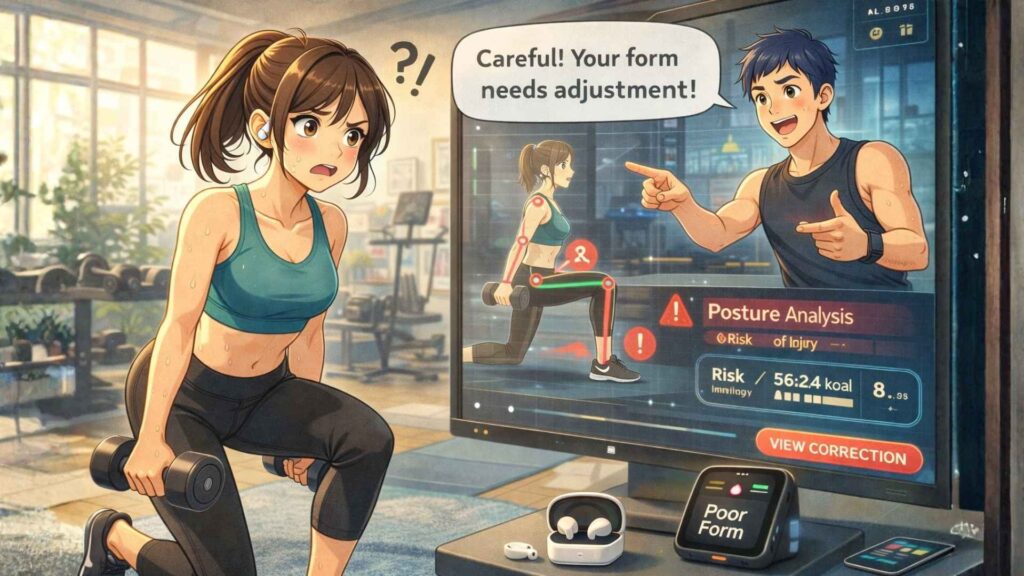
The real issue
A lot of people are not lazy. They are cautious. Maybe a bad back flare up, a cranky knee, or a shoulder that never quite forgave an old bench press mistake. The result is the same: you tense up around squats, deadlifts, and overhead pressing because you are not sure if your form is safe or if you are one rep away from trouble.
That uncertainty is a real brake on progress. You hold back on weight, avoid full range of motion, and stay away from lifts you know would help if you could trust your technique. This is exactly the problem smart training tools can help with when you use them well.
Tools that actually help
Not every gadget that lights up and beeps is an injury prevention device. But some tech can give you clear, useful feedback about how you move instead of leaving you guessing.
- Form tracking apps: These use your phone camera to check squat depth, knee alignment, hip position, and back posture. They will not replace a coach, but they can flag obvious issues like collapsing knees or a rounded spine.
- Smart mirrors: A smart mirror shows your movement next to a coach demo on one screen. You see your own squat, deadlift, or press in real time, which makes it much easier to match the position you are aiming for instead of relying on feel alone.
- Smart strength systems: Digital weight machines and cable trainers offer controlled resistance, guided ranges of motion, and built in limits. They can reduce the risk of getting pinned under a bar or drifting into positions that stress your joints.
Used together with basic lifting rules, these tools let you practice good form in a low risk environment instead of gambling under heavy loads.
What to avoid
Even the smartest gear cannot override bad decisions. A few habits will keep you safer than any device alone.
- Chasing intensity before form: If you are adding weight while your squat, deadlift, or press still looks shaky on video, you are asking for a problem. Clean movement first, heavy loads later.
- Assuming tech is a force field: A smart machine does not automatically protect your joints. You can still use bad positions on a digital strength system or rush through a guided workout with sloppy technique. The device is a tool, not armor.
The guiding principle is simple: let technology highlight issues, but do not let it tempt you into skipping the basics.
Practical setup
You do not need full time video review to make your training safer. You need a steady, repeatable check in.
-
Film or track your three main lifts once per week:
Pick your key movements, such as squats, deadlifts, and presses. Use your phone, a form tracking app, or a smart mirror to review a couple of working sets. -
Pair tech with simple rules:
Use smart checking tools alongside basic form cues: neutral spine, knees tracking over toes, full foot contact, and controlled tempo. The app points out problems; the rules tell you what to do about them. -
Use feedback to adjust range, stance, and load:
If video shows your squat folding at the bottom, shorten the range slightly and work on control. If your deadlift starts with a rounded back, lower the weight and adjust your hip position. Let the footage drive small changes, not ego lifts.
Over time, those small, tech assisted corrections add up. Your confidence under the bar or cable goes up, your pain levels tend to go down, and the lifts you used to avoid become tools you can trust instead of risks you sidestep.
Problem 6: “I Feel Overwhelmed By All The Numbers” – Keeping Smart Data Simple
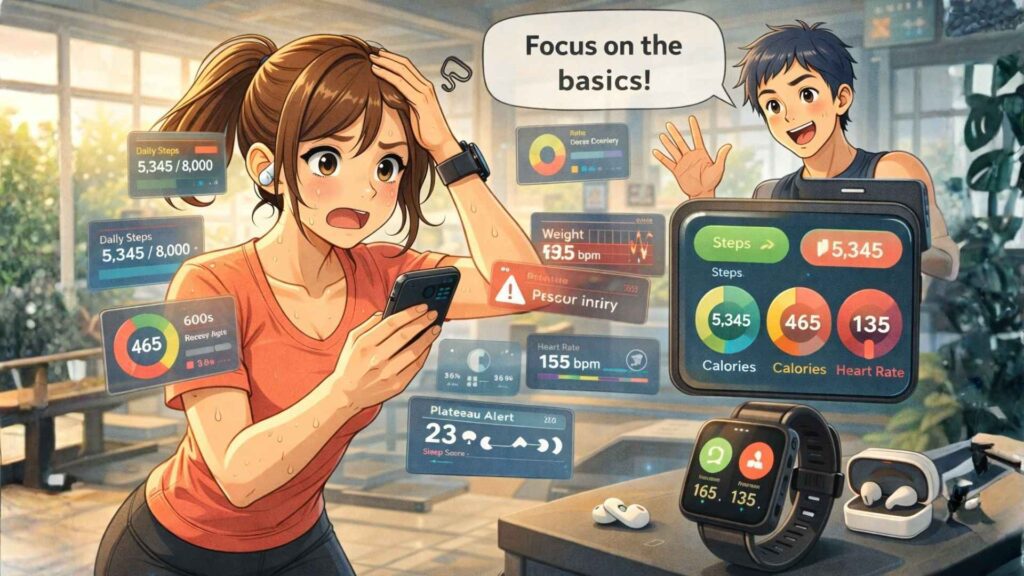
The real issue
At some point, the tech that was supposed to make training clearer starts to feel like another job. Your phone, watch, and smart equipment all have dashboards. Every app has charts. You are supposed to care about recovery scores, step counts, calories, heart rate zones, VO2 estimates, and sleep stages. Instead of feeling supported, you feel judged.
When every workout ends with a swirl of metrics, it is easy to lose the plot. You stop asking the simple question “Did I train well this week?” and start worrying about whether your graphs look impressive enough. That is not smart fitness. That is noise.
Strip it down
The fix is not more data. It is less, but better chosen. Three categories are enough for most people: health, strength, and cardio. Everything else can sit in the background.
- For health: Daily steps and weekly active minutes. If your step count and total active time are moving in the right direction, you are doing more than most people who obsess over advanced metrics.
- For strength: Total weekly sets for your key lifts. Squats, hinges, pushes, pulls. If the number of quality sets climbs slowly over time, your strength training is on track.
- For cardio: Time spent in moderate and hard zones each week. You do not need to know every beat of every run. You need to know whether you are getting enough time where your heart has to work.
These numbers are simple enough to understand at a glance and powerful enough to guide real changes in your training routine.
Practical setup
You can turn a chaotic data stream into a clean, useful picture in a few minutes if you are willing to be ruthless.
-
Turn off non essential metrics:
Go into your fitness tracker and app settings. Hide or mute the fields you never use. If a metric does not affect your decisions, it does not need to be front and center. -
Set one weekly target per category:
Examples: three strength workouts, 150 minutes of cardio, and hitting your step goal on five days out of seven. Let those be your headline numbers. Everything else is detail. -
Check charts weekly, not daily:
Once a week, open your progress views. Ask one question: “Do I need a small change here?” Maybe that means adding a set, trimming a session, or trading one hard workout for a recovery day. Use data to guide tweaks, not to beat yourself up.
When you keep smart data this simple, your watch and apps stop feeling like critics and start acting like quiet, objective scorekeepers. The numbers serve your training instead of the other way around.
Pitfalls And Red Flags: When Smart Fitness Becomes A Trap
Smart fitness can be a powerful ally. It can also quietly turn into a money drain, a distraction, or a slow leak of your personal data. The tech is not the enemy, but there are clear moments when it stops serving your training and starts using you instead.
Subscription overload
It starts with one membership for your connected bike. Then a separate plan for the smart treadmill. Then a premium tier for the workout app, plus another for meditation and recovery. None of them seem expensive on their own, but together they stack up fast.
- Multiple memberships for bikes, treadmills, and apps you rarely open.
- Paying for live classes on three platforms when you only join one.
- Renewals that roll over month after month without a second thought.
The fix is simple and ruthless: audit your subscriptions. Pull up your app store and payment history, list every fitness related charge, and ask one question for each: have I used this at least once a week in the last month. Keep what you use regularly, cancel the rest. Your training will not suffer. Your bank account will breathe a little easier.
Gadget chasing over basics
Another common trap is chasing the next device instead of the next workout. You buy a smart bike, then a smart rower, then a digital strength machine, then an upgraded smartwatch. The collection grows, but your routine does not.
- Buying every new smart device without building a consistent weekly schedule.
- Spending more time researching gear than training with the gear you already have.
- Using equipment once in the honeymoon phase, then letting it sit untouched.
The reminder here is blunt but useful: simple dumbbells and a walk beat unused premium machines every time. Basic movement, pushed consistently, still does most of the real work. Let new tech earn its place by making those basics easier to repeat, not by replacing them with more complicated excuses.
Ignoring privacy and data
Smart fitness is built on data. Steps, heart rate, GPS routes, workout times, sleep, stress. Some of that information stays on your device. Some of it travels to company servers, third party partners, and social features you may not even remember turning on.
- Location, health, and behavior data being logged by default.
- Automatic sharing of workouts and routes with social feeds or friends lists.
- Unclear data sharing policies between apps, platforms, and advertisers.
You do not need to become paranoid, but you should be deliberate. Take ten minutes to review privacy settings and data sharing options in each major app and device you use. Turn off public sharing you do not want. Limit cross app connections you do not need. Keep the data that helps you train, and dial back the rest.
When you watch for these red flags and fix them early, smart fitness goes back to what it should be: a useful layer of support on top of a simple plan, not a trap built out of payments, distractions, and leaks.
Choose Your Smart Fitness Setup: Three Simple Blueprints
At this point, you know that more gear is not the answer. The right gear, in the right setup, is. To make it concrete, here are three simple blueprints. Pick the one that feels closest to your life right now, not the fantasy version where you suddenly have two free hours a day and a spare room just for equipment.
The Minimalist Mover
Goal: Move more, feel better, keep it simple. You care about health, energy, and daily activity, not chasing race times or max lifts. You want your smart fitness setup to nudge you, not overwhelm you.
Setup:
- One fitness tracker: A basic smartwatch or fitness band that tracks steps, heart rate, and active minutes. No need for advanced metrics.
- One smart cardio option: A folding smart treadmill, compact connected bike, or even an under desk treadmill for daily steps.
- Bodyweight routine guided by an app: A simple app that runs you through short, no equipment strength and mobility sessions at home.
This blueprint gives you a clear daily picture: how much you moved, whether you hit your step and active minute goals, and whether you did a couple of short strength sessions this week. Nothing fancy, very hard to ignore.
The Strength Focused Home Athlete
Goal: Build muscle and strength at home without turning your living room into a commercial gym. You are willing to work, you just need smart tools that make progressive strength training realistic in a small space.
Setup:
- Smart adjustable dumbbells or a digital strength machine: One compact system that covers most major lifts and lets you change weight quickly while tracking sets and reps.
- Form tracking app: A phone based app or smart mirror that gives you basic feedback on squat, hinge, press, and row technique.
- Basic wearable: A smartwatch or fitness tracker to log strength sessions, daily movement, and recovery.
With this blueprint, your smart gear handles the weight selection, tracks your volume, and flags form issues while you focus on showing up for three or four solid sessions a week. Progress is easy to see in your app instead of living in guesswork.
The Data Driven Performer
Goal: Serious progress in running, cycling, or hybrid training. You like numbers, you are comfortable with structured plans, and you want your smart fitness setup to behave more like a coach than a toy.
Setup:
- Connected bike or treadmill: A machine that records distance, pace, power, and heart rate, and can run structured intervals or race simulations.
- Smartwatch plus heart rate strap: The watch handles GPS, tracking, and daily metrics. The strap gives accurate heart rate data for intervals and long sessions.
- Structured program through an app: A training app that builds periodized plans for your goal, whether that is a race, a specific time, or peak fitness for your sport.
Here, your connected fitness setup is designed to push you. Workouts are planned, intensity is guided by heart rate and power, and your app uses performance trends to adjust volume and recovery. The key is staying loyal to the plan and using the data to steer, not to second guess every single session.
You do not have to stay in one blueprint forever. As your life shifts, your smart fitness setup can shift with it. But starting with one clear template is how you stop collecting devices and start collecting results.
30 Day Action Plan: Turn Your Smart Gear Into Real Results
You do not need a new gadget. You need a new way to use the ones you already own. This 30 day plan gives you a clear sequence: clean up, commit, adjust, and then decide what stays. Follow it once, and your smart fitness setup will either start working for you, or get out of the way.
Week 1: Audit And Simplify
First, put everything on the table. The goal this week is not more training. It is clarity.
-
List all devices and subscriptions:
Write down your smart treadmill, connected bike, smart rower, digital strength machine, wearables, and every app that charges you monthly. Seeing it all in one place is often a shock, in a useful way. -
Pick one main goal and one primary platform:
Choose a single outcome you care about most right now, such as fat loss, better cardio, or more strength. Then pick one main platform to support it: a specific app, device, or digital strength system. Everything else is optional.
By the end of Week 1, you should know exactly what you are training for and which piece of tech is leading the way.
Week 2: Build The Routine
Now that you have a clear leader in your setup, give it a schedule. This is where smart fitness equipment starts to feel like a system instead of a pile of options.
-
Lock three weekly training slots in the calendar:
Treat them like appointments. Morning, lunch, or evening, but the same days and times each week. Protect them the way you protect meetings or calls you cannot miss. -
Use guided workouts from your chosen app or device:
Do not program your own sessions this week. Let your main platform handle the plan. Your job is to show up and complete what it gives you: rides, runs, rows, or strength circuits.
By the end of Week 2, you should have six to nine guided workouts completed and a sense of how your routine fits into real life.
Week 3: Review And Adjust
This is where smart data earns its keep. You are not looking for perfection. You are looking for a small, clear tweak.
-
Check your core metrics once this week:
Open your main app or device dashboard. Look at the single marker tied to your goal: weekly active minutes, average pace, total lifting volume, or completed sessions. -
Add small changes:
Make one adjustment, not ten. Add a little more volume, slightly faster intervals, an extra set on your main lift, or one more short walk on a rest day. The point is controlled progression, not a complete overhaul.
By the end of Week 3, you should see the first signs of structure: steady sessions, a clear trend in your numbers, and small changes that feel challenging but realistic.
Week 4: Decide What Earns Its Place
Now comes the honest part. You have given your smart gear a fair test inside a real routine. Some pieces helped. Others just sat there.
-
Keep the gear and apps you used at least twice per week:
If a device or app showed up in your actual training log more than once a week, it stays. It passed the test. -
Put the rest on notice:
Gadgets you never touched or apps you never opened go in a new category. Put them away, sell them, or repurpose them for someone else in the house. If they are not part of your routine after 30 days, they are clutter, not tools.
By the end of Week 4, your smart fitness setup should be smaller, clearer, and actually used. You will have one main goal, one primary platform, a standing routine, and a short list of devices that earn their space by helping you train, not by looking impressive in the corner.
Closing: Let The Tech Work For You, Not The Other Way Around
The Core Message
Smart fitness equipment is not the enemy and it is not the hero. It is a set of tools. Used well, it removes friction from your day, gives you clear feedback, and makes training more enjoyable. A smart treadmill or connected bike can turn a solo workout into a class. A digital strength machine can take the guesswork out of sets and reps. A simple fitness tracker can nudge you off the couch when the step count looks low.
But none of it matters if the tech is not tied to something real. These devices only start earning their price when they serve clear goals, simple habits, and basic training principles: move often, lift with good form, sleep enough, and progress in small, steady steps. Without that foundation, the smartest gear in the room is just another screen demanding your attention.
The point is not to live in your dashboards. The point is to make it easier to do what works: regular workouts, better technique, thoughtful progression, and honest recovery. Let the tech handle the counting and tracking so you can focus on the work and the results.
Your Next Move
If this guide did its job, you are already thinking differently about the smart fitness equipment you own. The next step is small and specific, not dramatic.
- Explore deeper guides: Use the buying guides, comparisons, and form guides on this site to check whether your current gear really fits your goals, or to choose smarter replacements when you are ready.
-
Make one smart change this week: Pick a single move that you can act on now:
- Set a clearer goal inside your main app.
- Trim your app list down to the one platform you actually use.
- Build a simple routine that ties directly to the tech you already own.
You do not need a full reset. You need one clear decision and one better habit, backed by tools that finally work in your favor. Start there, let your smart gear support the routine instead of dictating it, and the next time you look at your setup, it will feel less like a collection of gadgets and more like a training partner you can trust.